
Corrosion resistance is one of the most important performance indicators for architectural and furniture hardware, especially for lever handles that are touched frequently and exposed to humidity, cleaning chemicals, and environmental fluctuations. Different surface-treatment processes can significantly influence the durability, appearance, and maintenance needs of a lever handle. Understanding these processes helps buyers choose the most suitable finish for homes, commercial facilities, hotels, and public buildings.
This article explains the major finishing technologies used for stainless steel lever handles, compares their corrosion-resistance capabilities, and clarifies which process delivers the strongest long-term protection. It also highlights how DESCOO optimizes each step of production to provide high-grade lever handles such as our stainless steel lever handle series.
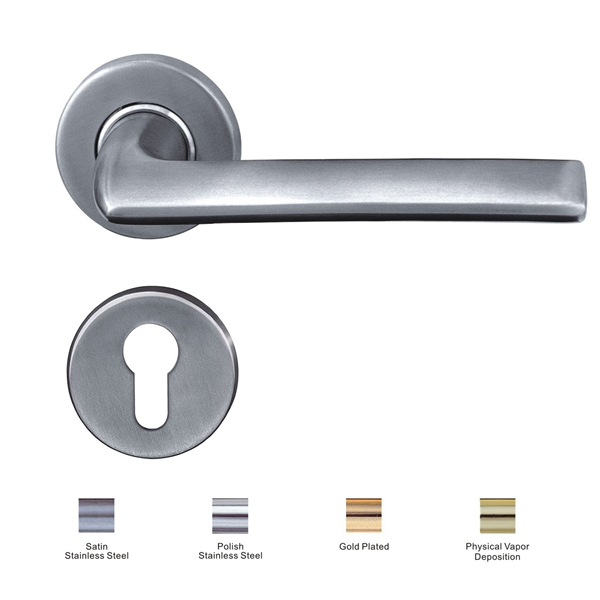
Corrosion resistance depends on a combination of factors including the base material, surface finish, protective coating, and environmental conditions.
Stainless steel inherently resists oxidation because of its chromium content, but the final resistance level varies depending on whether it is:
Mechanically polished
Satin-finished
Electroplated
Coated with PVD
Treated through additional passivation processes
For Door hardware frequently used in kitchens, bathrooms, coastal environments, or outdoor spaces, a superior finishing method is essential to ensure aesthetic stability and structural longevity.
Below is a structured comparison of the most widely used finishing techniques for stainless steel lever handles.
| Surface Finish / Coating | Process Description | Corrosion Resistance Level | Common Applications |
|---|---|---|---|
| Satin Stainless Steel | Fine abrasive brushing for matte surface | Medium | Residential interiors, offices |
| Polished Stainless Steel | Mirror-like mechanical polishing | Medium-High | Decorative or luxury interiors |
| Gold Plating | Thin metallic coating applied through electroplating | Medium | Boutique hotels, premium décor |
| PVD (Physical Vapor Deposition) | Titanium-based coating bonded through vacuum deposition | Very High | High-humidity zones, coastal projects, commercial buildings |
This table indicates that PVD technology delivers the strongest corrosion resistance, particularly when applied to high-quality stainless steel lever handles like those produced by DESCOO.
Both satin and polished finishes rely on stainless steel’s natural oxide layer for protection. The difference lies mainly in texture and maintenance:
Satin Stainless Steel
Has micro-grooves that can retain moisture or dust if poorly maintained
Provides stable resistance in everyday indoor environments
Polished Stainless Steel
Smoother and less likely to trap contaminants
Offers slightly better resistance to fingerprint acids and cleaning chemicals
However, neither finish compares to coated processes in extreme conditions.
Gold plating is ideal for decorative installations but the protective metal layer is thin. Over time, repeated touching or abrasive cleaners can wear through the surface.
Key points:
Corrosion protection is acceptable for low-contact interiors.
Long-term exposure to salt or moisture may cause underlying stainless steel discoloration.
Best used where visual luxury is the priority rather than industrial-grade durability.
If a gold appearance is required with better durability, PVD gold is far superior.
Physical Vapor Deposition (PVD) is considered the most advanced finishing process for stainless steel lever handles.
High hardness coating significantly increases abrasion resistance.
Chemical stability protects against acids, alkalis, and cleaning agents.
Dense molecular structure prevents moisture penetration.
Extended lifespan, often exceeding other finishes by several years.
Color durability ensures stable hues such as gun grey, matte black, or gold without fading.
For users in coastal regions, commercial facilities, or high-traffic buildings, PVD is the most reliable option.
DESCOO offers PVD finishes for multiple lever-handle models, including the stainless steel lever handle collection, ensuring maximum corrosion protection.
A finish’s performance varies greatly depending on where it is used. Below is a breakdown of typical environments and recommended finishes:
| Environment Type | Risk Factors | Suitable Finishes |
|---|---|---|
| Bathroom | High humidity, cleaning chemicals | PVD, Polished SS |
| Coastal Buildings | Salt spray, temperature changes | PVD (Strongly Recommended) |
| Commercial Buildings | High touch frequency | PVD, Satin SS |
| Standard Living Rooms | Mild exposure | Satin SS, Polished SS |
Selecting the right finish prevents premature corrosion and reduces maintenance needs.
DESCOO integrates strict quality-control steps at every stage:
High-grade stainless steel selection ensures strong base resistance.
Precision machining reduces micro-defects that attract corrosion.
Optional premium PVD coating provides industry-leading durability.
Salt-spray testing validates corrosion performance for each production batch.
Multiple finish options (polished stainless steel, gold plated, gun grey, matte black) support different design requirements.
Our lever handle products combine aesthetic refinement with long-term structural protection.
Below is a ranked summary from strongest to weakest corrosion resistance:
PVD Coating — Best overall durability, recommended for high-humidity and high-traffic environments.
Polished Stainless Steel — Good resistance due to smooth surface.
Satin Stainless Steel — Reliable for indoor residential use.
Gold Plating — Best for aesthetics but lower long-term corrosion resistance unless upgraded to PVD gold.
The most corrosion-resistant process for lever handles is PVD coating, offering exceptional performance, chemical resistance, and long-term color stability. While polished and satin stainless steel finishes remain dependable for standard interiors, PVD provides unmatched endurance for demanding environments.
For projects requiring both durability and refined design, DESCOO’s PVD-finished stainless steel lever handles represent the highest standard in modern Door Hardware.
If you would like recommendations tailored to your project, feel free to request a customized solution.