
Choosing the correct pull handle size is essential for both functional comfort and aesthetic balance. Whether you are installing handles on doors, cabinets, glass panels, or commercial entrances, precise measurement ensures proper alignment and smooth operation. This guide explains how to measure pull handles step by step, clarifies common measurement terms, and helps you avoid errors that lead to misaligned installations. For projects requiring premium stainless-steel pull handles, DESCOO provides multiple high-grade options such as our stainless steel pull handle collection.
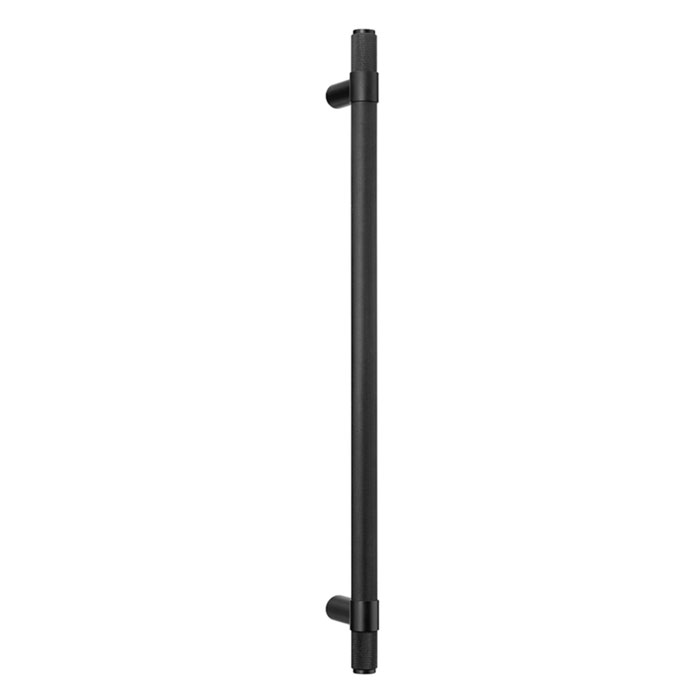
Before taking any measurements, understanding the terminology used for pull handles is essential. These dimensions determine compatibility with your door thickness, hole spacing, and ergonomic requirements.
Overall Length (OAL)
The full length of the pull handle from tip to tip.
Center-to-Center (CTC)
The distance between the screw holes or mounting points. This is the most critical measurement because it must match the pre-drilled holes in the door or panel.
Projection
The distance the handle extends outward from the surface. Higher projection offers more grip space.
Grip Length / Handle Section Length
The usable length where the hand comfortably grasps the handle.
Diameter / Width of Handle Tube
The thickness of the handle, affecting both grip comfort and visual weight.
These measurements apply to all architectural pull handles, including the stainless-steel options produced by DESCOO in our pull handle series.
The center-to-center spacing is the most important dimension, especially for replacement installations.
Identify the mounting points or existing screw holes.
Use a metal tape measure or digital caliper for precision.
Measure from the center of the top hole to the center of the bottom hole.
If replacing a handle, measure both holes to confirm consistency.
For new installations, choose a CTC that suits your door height and usage frequency.
A precise CTC measurement ensures immediate compatibility with DESCOO’s stainless-steel pull handles, which are available in multiple CTC standards.
The overall length affects visual proportion and architectural style.
For tall entry doors, longer pull handles create a modern, elegant look.
For compact cabinet doors, shorter lengths maintain balance.
For double doors, symmetrical overall lengths provide visual harmony.
Simply extend your tape measure from end to end, ensuring the handle is not tilted during measurement.
Projection and grip length directly influence comfort and usability.
Place the handle flat on a surface.
Measure from the surface to the highest point of the handle.
Ensure accuracy because too low a projection can make gripping difficult.
Exclude the two end brackets or legs.
Measure only the straight or curved section used by the hand.
Choose longer grip lengths for doors used by children or elderly individuals.
DESCOO designs pull handles with ergonomic projection and grip ratios to improve comfort and long-term durability.
Measurement is not limited to handle length alone; door parameters also matter.
Door Thickness
Ensure the fixing bolts match the door thickness, especially for glass doors.
Back-to-Back Fixing or Single-Sided Fixing
These require different screw lengths and mounting kits.
Material Compatibility
Glass, wood, and aluminum require different mounting hardware.
Handle Shape
Round, square, D-shape, or ladder-style handles may influence measurement points.
Installation Height
Typically 900mm–1100mm from floor level for entry doors, though this varies by region.
These aspects are essential when selecting products such as DESCOO’s premium pull handles.
| Measurement Type | What It Measures | Why It Matters |
|---|---|---|
| Overall Length | Full end-to-end size | Visual proportion and design style |
| Center-to-Center | Screw hole spacing | Compatibility with existing installation |
| Projection | Depth from door surface | Comfort and accessibility |
| Grip Length | Usable gripping area | Ergonomic hand placement |
| Tube Diameter | Thickness of handle body | Appearance + comfort |
This table helps buyers understand which dimension impacts which function.
Glass installations require additional precision to prevent cracks or imbalance.
Measure the exact hole spacing already drilled in the glass.
Confirm handle diameter fits well with gaskets and washers.
Ensure bushings and spacers are compatible with the glass thickness.
Select stainless-steel materials for moisture-rich environments like bathrooms and storefronts.
DESCOO’s pull handles are engineered with proper gaskets, rubber pads, and stainless assemblies suitable for glass installations.
CTC: 200mm–600mm depending on door size
Projection: Standard projection works well
Diameter: Mid-size tube improves grip stability
CTC: Must match factory-cut holes exactly
Projection: Slightly higher projection improves grip with wet hands
Diameter: Slimmer designs for modern aesthetics
CTC: 800mm–1500mm for tall architectural doors
Projection: Larger projection supports heavy use
Diameter: Thicker tubes give a luxury appearance and improved strength
DESCOO provides various options to meet each application scenario in the pull handle product range.
Only measuring the overall length
CTC is the critical installation dimension.
Ignoring door thickness
Leads to incorrect bolt lengths.
Not confirming mounting type
Single-side vs. back-to-back requires different kits.
Using soft measuring tools
Always use a rigid tape measure or caliper for accuracy.
Guessing instead of verifying
Even a 2–3mm error can make installation impossible.
DESCOO designs each pull handle with precision machining, corrosion-resistant stainless steel, and multiple surface finishes including satin, polished, PVD, and matte textures. Our pull handles offer:
Accurate hole spacing tolerances
Strong structural integrity
Modern architectural styles
Smooth grip surfaces
High corrosion resistance
Compatibility with wood, metal, and glass doors
You can explore our full selection through the DESCOO pull handle collection.
Measuring pull handles correctly requires understanding key dimensions such as center-to-center spacing, overall length, projection, and grip length. These measurements determine installation compatibility, visual balance, and user comfort. By following the detailed steps outlined in this guide, you can confidently select the right pull handle for any application. For premium stainless-steel designs engineered with precision, DESCOO offers a complete range of pull handles suitable for residential, commercial, and architectural projects.