
Determining the correct number of concealed hinges for a door is essential for ensuring stability, smooth operation, and long-term durability. Concealed hinges support the door’s weight, maintain alignment over years of use, and contribute to a clean, seamless appearance. This article explains how many concealed hinges are needed for different types of doors, the factors that influence hinge quantity, and how to select quality hardware such as DESCOO’s stainless-steel concealed hinge line, including our high-precision concealed hinges.
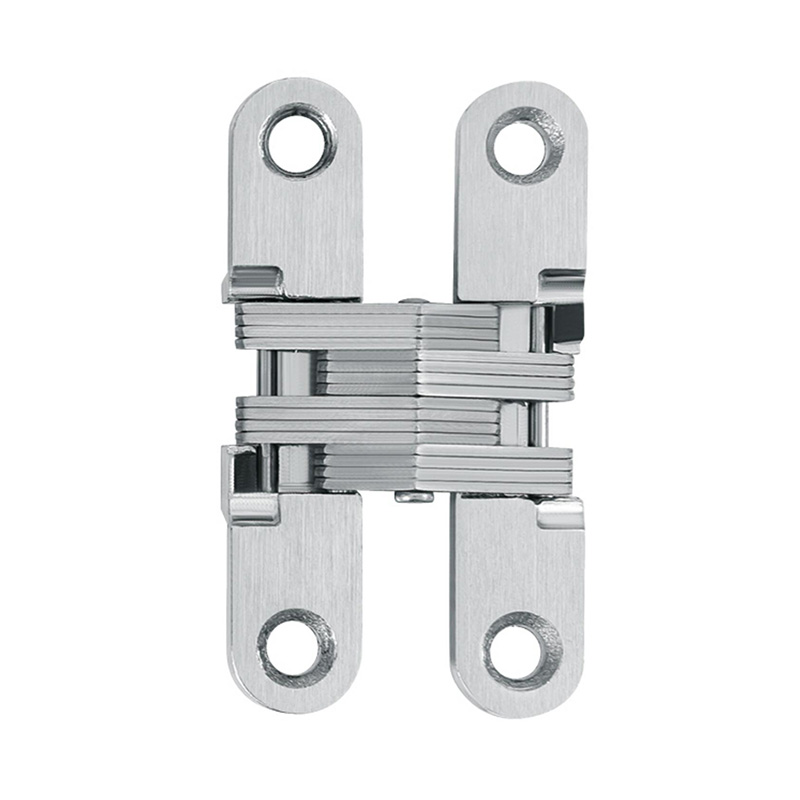
A general guideline for most residential and commercial doors is simple:
Two concealed hinges for lightweight or small interior doors.
Three concealed hinges for full-height, heavy, or frequently used doors.
This rule ensures sufficient vertical load support and helps prevent sagging over time. However, the ideal number varies based on several structural and functional factors, which we detail below.
Selecting hinge quantity isn’t arbitrary; it depends on door construction, weight, and usage intensity. Understanding these variables ensures proper installation and long service life.
Heavier doors require additional hinges to evenly distribute weight.
Hollow-core wood door (lightweight) → typically 2 hinges
Solid-wood or fire-rated door (heavy) → 3 hinges minimum
Metal or reinforced panel doors → 3–4 hinges depending on weight
DESCOO’s stainless-steel concealed hinges have high load-bearing capacity and are engineered to support both residential and commercial door weights.
Height influences leverage and stress on the hinge locations.
Doors up to 2000 mm → 2 hinges
Doors 2000–2400 mm → 3 hinges
Doors above 2400 mm → 4 hinges recommended
Adding a hinge near the top minimizes long-term deformation caused by gravity.
High-traffic areas put more stress on hinge mechanisms.
Low-traffic bedroom door → 2 hinges
Office or commercial room door → 3 hinges
Public access doors (store entrances, meeting rooms) → 3–4 hinges
Dense materials like solid oak or steel increase torque on hinges.
Thin MDF panels → 2 hinges
Solid hardwood → 3 hinges
Composite or laminated acoustic doors → 3 or more hinges
DESCOO’s concealed hinge solutions come in multiple load-bearing specifications to match different materials.
A quick reference table helps determine the ideal hinge count for common door types.
| Door Type | Door Weight | Door Height | Recommended Hinges |
|---|---|---|---|
| Interior hollow-core | Light | ≤ 2000 mm | 2 |
| Solid wood interior | Medium/Heavy | 2000–2400 mm | 3 |
| Main entrance wood door | Heavy | ≥ 2200 mm | 3–4 |
| Metal or reinforced door | Very heavy | Any height | 3–4 |
| Acoustic / fire-rated door | Heavy | 2100–2400 mm | 3 |
| Oversized custom door | Very heavy | ≥ 2400 mm | 4 |
This table highlights the balance between weight, height, and expected performance.
Choosing fewer hinges than required can lead to structural and functional defects. These issues often appear gradually, making proper hinge count critical from the start.
Door sagging, causing misalignment and difficulty closing.
Loose screws and poor anchoring, as weight overburdens the upper hinge.
Warping or twisting, especially in tall wooden doors.
Excess wear, reducing hinge life and increasing maintenance needs.
Frame deformation, making future repairs more expensive.
High-quality stainless-steel hinges, such as DESCOO’s models, minimize wear even under heavy loads, but correct hinge quantity is still necessary for optimal performance.
How many hinges you use is important, but where you place them is equally critical for balance, long-term stability, and smooth rotation.
Top hinge: Install 150–200 mm from the top edge of the door. This hinge absorbs most load.
Bottom hinge: Install 180–250 mm from the bottom edge to stabilize vertical alignment.
Middle hinge (when using 3 hinges): Place it centrally OR slightly above center for additional top support.
Fourth hinge: For oversized doors, distribute evenly to reduce torque.
DESCOO’s hinge designs support multi-hinge placements and remain visually hidden while providing strong structural reinforcement.
Not all concealed hinges support the same weight. Using the wrong capacity can lead to premature failure.
Light duty: 20–30 kg
Medium duty: 30–45 kg
Heavy duty: 45–60 kg
Ultra heavy duty: Above 60 kg
To ensure the correct match, always compare your door’s weight with the hinge’s rated load. DESCOO provides multiple load-bearing options within our concealed hinge series to support everything from interior passage doors to heavy entrance panels.
Beyond structural support, additional hinges offer functional and aesthetic benefits.
Improved stability during repeated opening cycles
Enhanced resistance to environmental changes such as humidity or temperature
Reduced strain on individual hinge components
Better noise reduction, especially in acoustic doors
More uniform pressure distribution, preventing micro-cracks in the frame
More hinges often extend hardware lifespan and help maintain the smooth, quiet motion expected from premium doors.
Certain door types require special hinge considerations based on usage and installation style.
Require hinges engineered for accuracy and metal compatibility.
Recommended: 2–3 hinges depending on door size.
Require heavy-duty concealed hinges with certified performance.
Recommended: 3 hinges minimum.
Structural stability must be reinforced.
Recommended: 3–4 hinges for safety.
DESCOO offers stainless-steel concealed hinges suitable for demanding environments, ensuring reliability regardless of application.
DESCOO is a specialized hardware manufacturer with engineering expertise in high-performance door hinges. Our concealed hinges feature:
Precision stainless-steel construction
Smooth rotational pivoting
High load-bearing strength
Anti-corrosion finishing
Multiple installation specifications
Long operational lifespan due to strict QC processes
Explore our complete hinge portfolio here: DESCOO Concealed Hinges.
How many concealed hinges a door needs depends on door weight, height, material type, and usage frequency. While lightweight interior doors may operate well with two hinges, heavier or taller doors typically require three or four hinges for long-term stability and smooth operation. Accurate hinge selection prevents sagging, misalignment, and premature wear. For reliable performance and premium material quality, DESCOO’s stainless-steel concealed hinges provide robust support for all architectural door types.