
A bathroom door thumb turn lock is a simple privacy solution that allows the user to lock the door from the inside with a turn of the thumb, while still allowing emergency access from the outside. It is commonly installed on bathroom, washroom, and ensuite doors in homes, hotels, apartments, and commercial spaces where privacy is needed but quick access must remain possible.
Fitting a thumb turn lock is a practical project when the correct lock type is chosen and the door is prepared accurately. This guide explains how to install it step by step, how to avoid common mistakes that cause misalignment or sticking, and what to check after installation to ensure smooth daily use. For projects that require reliable hardware options and consistent quality, DESCOO supplies a wide range of door accessories suitable for bathroom and interior door applications.
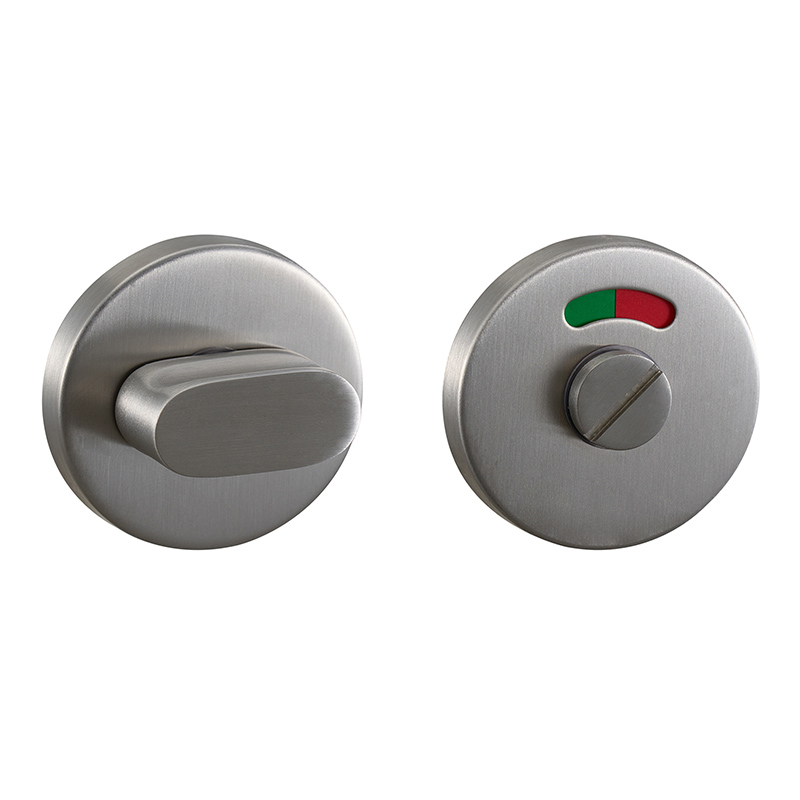
Most thumb turn locks are made up of three key parts.
The internal thumb turn
This is the part you rotate to lock and unlock from inside the bathroom.
The external emergency release
This is usually a slotted face or small access point so the lock can be opened from outside in an emergency.
The latch or bolt mechanism
This is the component that engages into the door frame to secure the door.
Some thumb turn privacy locks are combined with a latch, while others are a separate deadbolt-style privacy bolt. The installation steps are similar, but you must confirm which style you are fitting before drilling.
Installing a thumb turn lock accurately depends on measurement more than force. Before starting, prepare:
Tape measure or ruler
Pencil for marking
Drill and suitable bits
Hole saw sized to your lock body and spindle
Screwdriver
Chisel for faceplate mortising if required
A square or straight edge for alignment
If you are replacing an old lock, take time to measure the existing backset and hole positions. If you are installing into a new door, confirm door thickness and lock compatibility before drilling.
Most privacy locks are designed for common interior door thickness ranges. The lock must match the door thickness so the spindle length and screws can connect properly.
Choose the installation height based on typical use. Many installers place the thumb turn at a comfortable hand level, aligned with other handles or latch hardware on the door.
Backset is the distance from the door edge to the center of the lock body hole.
Measure the required backset according to the lock specification
Mark the center point on the door face
Mark the center point on the door edge for the latch or bolt path
Use a square to ensure marks align correctly between face and edge
Accurate marking prevents the most common issue: the thumb turn sits slightly off-center, causing friction and poor operation.
The door face hole is typically drilled using a hole saw.
Drill halfway from one side to reduce tear-out
Finish the hole from the opposite side using the pilot point
Keep the drill level so the hole remains straight
Clean holes improve hardware fit and reduce stress on screws.
The edge hole guides the latch or bolt into the door frame.
Use the correct drill bit diameter for the latch or bolt body
Drill straight into the door edge to the required depth
Test-fit the latch or bolt body for smooth insertion
If the edge hole is angled, the lock can bind under load.
Many latches include a faceplate that sits flush with the door edge.
Place the faceplate on the door edge and trace its outline
Use a chisel to remove material to the faceplate thickness
Test-fit and adjust until flush
A flush faceplate helps the door close smoothly and prevents rubbing.
Insert the latch or bolt into the edge hole
Align the faceplate and screw it into place
Confirm the mechanism moves freely before installing handles
Smooth movement at this stage indicates correct drilling and alignment.
Insert the spindle through the lock body
Place the internal thumb turn on the inside of the door
Place the external emergency release on the outside
Secure both sides with the provided screws
Tighten evenly to avoid twisting the lock body
Over-tightening can distort alignment and cause stiff turning.
The strike plate position determines how securely and smoothly the bolt engages.
Close the door and mark where the latch or bolt meets the frame
Chisel a shallow recess for the strike plate if needed
Drill pilot holes and fix the strike plate
Test closing and locking several times
If the bolt hits the strike plate edge, adjust the plate position rather than forcing the lock.
After installation, check lock performance under realistic use conditions.
Turn the thumb turn several times to confirm smooth action
Close the door gently and lock it to confirm full bolt engagement
Test unlocking from inside quickly, as it should release without sticking
Test emergency release function from outside according to the lock design
Confirm there is no rubbing between latch faceplate and frame
If the lock feels stiff, the most common reasons are misalignment, over-tightened screws, or an incorrect strike plate position.
This is often caused by screw tension or misalignment between lock body and spindle.
Loosen screws slightly and retest
Confirm the spindle passes through without rubbing
Ensure both sides are mounted evenly and centered
This is often a strike plate alignment issue.
Recheck where the bolt contacts the strike plate
Adjust strike plate position slightly
Confirm the bolt enters the strike hole fully
This can be caused by faceplate not sitting flush.
Confirm the faceplate recess depth is correct
Chisel a little more if necessary
Retighten and retest
A good installation outcome depends on the hardware choice. Buyers typically evaluate:
Material durability for long-term use
Stable internal mechanism that remains smooth after repeated cycles
Finish consistency for bathroom environments
Compatibility with common door thickness and standard installation layouts
Reliable packaging and supply consistency for project delivery
For renovation contractors and project buyers, stable product consistency reduces installation variance across multiple units.
Bathroom privacy hardware must be consistent, durable, and suitable for frequent daily use. In projects such as apartments, hotels, and commercial interiors, consistent hardware quality reduces installation adjustments and after-service issues.
DESCOO supplies a broad range of door accessories to support interior Door hardware requirements, including bathroom privacy solutions. For buyers who manage multi-unit projects, having a supplier with stable product options helps streamline sourcing and standardize installation results.
Fitting a bathroom door thumb turn lock is a manageable installation when the correct lock style is chosen and the door is marked and drilled accurately. Smooth performance depends on straight drilling, centered alignment, flush faceplates, and properly positioned strike plates. Post-installation testing ensures the lock turns easily, engages fully, and supports emergency access from outside when needed.
For reliable bathroom and interior Door Hardware options, DESCOO offers a practical selection of door accessories suitable for residential and project applications.
Previous: Are Ball Bearing Hinges Better?