
ball bearing hinges are often considered better than standard plain-bearing hinges when the door is heavy, used frequently, or expected to stay smooth and quiet for a long time. The reason is not marketing language. It is mechanical. A ball bearing hinge uses bearing elements inside the knuckle to reduce friction during movement. Lower friction usually means easier operation, less wear at the hinge pivot, and more stable performance over years of opening and closing.
That said, ball bearing hinges are not automatically the best choice for every door. For light interior doors with low traffic, a standard hinge may be sufficient and more cost-effective. The right decision depends on door weight, traffic level, durability targets, and the quality of the hinge material and machining. This article explains when ball bearing hinges are worth it, how to evaluate them, and how to choose the right type for your project. Where product sourcing matters, DESCOO provides a reliable range of door hinges for residential and commercial use.
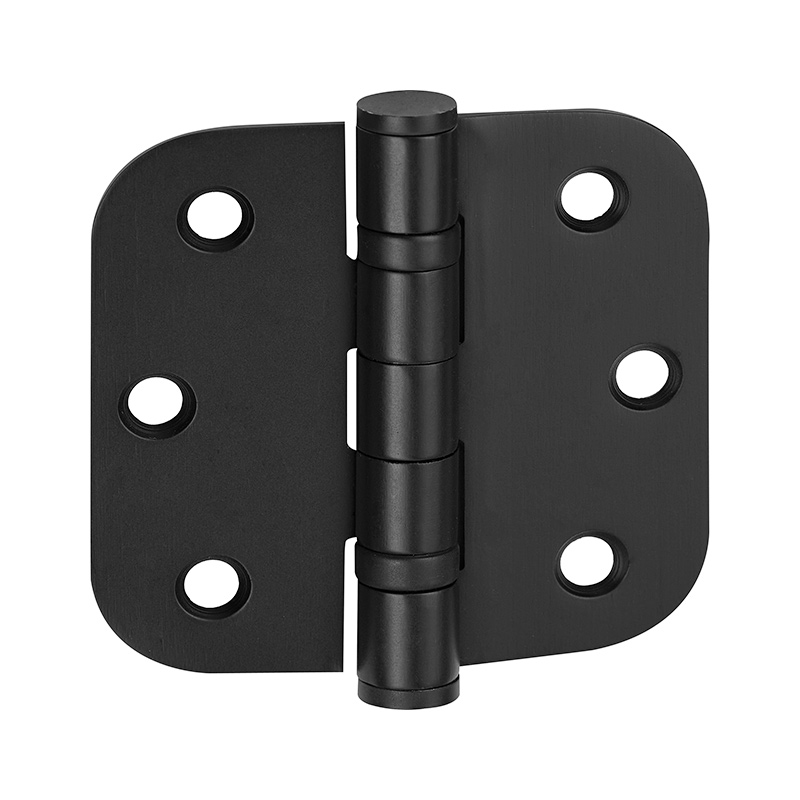
A standard hinge relies on metal-to-metal contact at the pivot point. Over time, friction and wear can increase, which may cause squeaking, stiffness, sagging, or faster loosening of screws as the door movement becomes less stable.
A ball bearing hinge reduces this friction by using bearing elements inside the hinge knuckle. In practical terms, this change can improve daily performance in several ways. The door often feels smoother to open. Noise is reduced because the movement is controlled and consistent. Wear at the pivot point is typically slower, which helps the hinge maintain stable alignment longer.
This difference becomes more noticeable when a door is opened hundreds of times per day, or when the door is heavy enough that friction and wear accumulate faster.
Ball bearing hinges are commonly used in high-demand situations where long-term smoothness matters.
Heavier doors put more load on the hinge pivot. Under load, friction increases and plain-bearing hinges can wear faster. Ball bearing hinges are often selected to reduce pivot stress and maintain stable swing performance.
Doors in offices, apartment corridors, hotel rooms, and commercial washrooms are opened and closed far more frequently than typical household interior doors. In these environments, durability and consistency matter. Ball bearing hinges are often chosen because they are designed to handle higher cycle counts with less performance drift.
Noise complaints often come from friction at the hinge pivot. Ball bearing hinges usually reduce squeaking and help maintain quieter operation over time, especially when aligned and installed correctly.
Door closers add repeated force and controlled speed movement. This accelerates wear if hinge friction is high. Ball bearing hinges are commonly used with closers because they reduce friction and help the closer work more efficiently.
Ball bearing hinges can still be used on light interior doors, but they may not be essential.
Lightweight hollow-core interior doors with low traffic
Closets and storage doors opened infrequently
Projects where budget is the main constraint and performance demand is low
In these cases, a good-quality standard hinge can still perform well. The key is making sure the hinge material and finish are appropriate and the hinge size is correctly matched to the door.
Not all ball bearing hinges perform the same. Quality is determined by material selection, manufacturing precision, finish durability, and load matching.
Hinge performance depends heavily on selecting the correct size and quantity. A hinge that is too small for a heavy door will still struggle, regardless of bearing type. In project procurement, it is common to match hinge size to door weight and door height, then confirm the number of hinges needed.
In humid areas or exterior applications, hinge corrosion resistance matters as much as smooth movement. Stainless steel options are often selected for moisture-prone areas, while different plated finishes may be used for indoor projects depending on design goals.
A ball bearing hinge needs consistent bearing alignment and a stable knuckle structure. Poor machining can cause uneven movement, noise, or early wear even if the hinge includes bearings.
Ball bearing hinges are generally lower friction, but proper installation still matters. If screws are not anchored into solid material or hinges are misaligned, sagging can occur regardless of hinge type.
| Evaluation point | Ball bearing hinge | Standard plain-bearing hinge |
|---|---|---|
| Smoothness under heavy load | Strong advantage | Can become stiff under high load |
| Performance over frequent cycles | Strong advantage | Wear increases faster with heavy use |
| Noise control | Usually quieter | More likely to squeak over time |
| Cost | Typically higher | Typically lower |
| Best use cases | Heavy doors and high traffic | Light doors and low traffic |
This comparison is useful for quick selection, but the final result depends on correct sizing and installation.
Even the best hinge can perform poorly if selection and installation are not aligned with the door and frame.
Match hinge size and quantity to the door weight and height
Ensure hinge positions are consistent and mortises are cut accurately
Use correct screws and ensure they bite into solid framing material
Confirm door and frame alignment before final tightening
Avoid forcing a hinge to correct a door that is already warped
In high-traffic settings, small installation errors tend to become visible faster, which is why project-level consistency matters.
In real procurement, buyers often focus on consistency and reliability, not only hinge type. A hinge that performs smoothly in one batch but varies in another can create installation rework and after-service issues across a project.
DESCOO supplies a broad range of door hinges to support residential and commercial applications, including options designed for heavier doors and frequent use. For project buyers, consistent product specifications, stable finishes, and dependable performance help reduce installation adjustments and support long-term door operation quality.
Ball bearing hinges are often better when you need smooth movement under load, consistent performance in high-traffic environments, and reduced noise over long-term use. They are especially valuable for heavy doors, doors with closers, and commercial or hospitality projects where durability and user experience matter.
For buyers who want stable performance and reliable sourcing, DESCOO provides practical options through its door hinge range to match different door weights, traffic levels, and project requirements.