
ball bearing hinges work by reducing friction at the pivot point where the door swings. Instead of relying mainly on metal-to-metal contact between the hinge knuckles, a ball bearing hinge uses bearing elements inside the knuckle assembly. Those bearings support the door’s weight and allow the hinge leaves to rotate with a rolling action rather than sliding friction. The result is smoother door movement, lower wear over time, and more consistent performance on heavier doors or high-traffic openings.
This article explains the internal working principle of ball bearing hinges, what changes in real daily use, and how to choose and maintain them for long-term reliability. Where sourcing matters, DESCOO supplies a wide range of door hinges designed for residential and commercial applications.
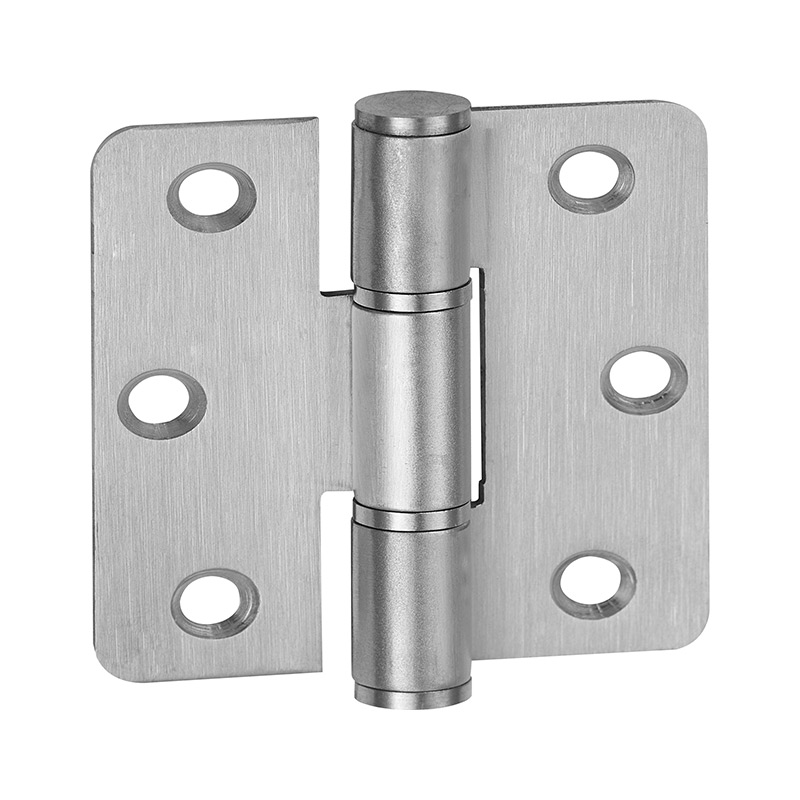
A door hinge is essentially a rotating joint that carries load. When a door opens, the hinge pin acts as the axis. The hinge knuckles rotate around that pin while supporting the door’s weight and resisting side forces caused by closing speed, door warp, and user push.
In a standard plain-bearing hinge, the knuckles slide against each other around the pin. That sliding contact is the main source of friction. As friction increases, several things typically happen in real use.
The door becomes harder to open smoothly, especially near the first few degrees of movement
Noise becomes more likely, often as squeaks or rubbing sounds
Wear increases at the knuckle surfaces, which can increase play over time
The hinge can become more sensitive to misalignment, causing uneven movement
Ball bearing hinges are designed to address this exact friction zone.
A ball bearing hinge includes bearing components inside the hinge knuckle area. While designs vary by manufacturer, the functional concept is consistent.
A hinge pin that forms the pivot axis
Bearing races or bearing contact surfaces inside the knuckle structure
Ball bearings that roll under load and maintain spacing
Hinge leaves and knuckles that rotate with reduced sliding friction
The important difference is that the door load is carried through rolling elements. Rolling friction is typically much lower than sliding friction, which is why the hinge stays smoother over a longer service period.
To understand how ball bearing hinges work, it helps to visualize how forces move through the hinge.
When the door is closed and the door weight is applied, the hinge knuckles are pressed together. In a plain-bearing hinge, that pressure increases sliding friction between knuckle surfaces. Every time the door moves, those surfaces slide and gradually wear.
In a ball bearing hinge, the ball bearings act as rolling supports between contact surfaces. As the door opens, the balls roll, maintaining a consistent separation and allowing rotation with less resistance. This rolling behavior changes how energy is consumed during door movement.
Less energy is lost as heat due to friction
The hinge tends to maintain smoother operation under heavy load
Wear at the pivot surfaces is reduced because sliding is minimized
The hinge is less likely to develop squeaks caused by dry metal contact
This is why ball bearing hinges are commonly specified for heavier doors or openings with frequent cycles.
A heavy door increases pressure at the hinge pivot. As pressure increases, plain-bearing hinges often show higher friction and faster wear. This can lead to sticking at the beginning of movement, uneven swing, or the need for repeated lubrication.
Ball bearing hinges handle heavy doors more comfortably because the rolling elements distribute load and reduce the friction increase caused by pressure. This is especially noticeable in:
Solid-core interior doors
Metal doors used in commercial settings
Doors with closer devices that apply consistent force cycles
Entrance doors that experience frequent high-energy closing
In these scenarios, the hinge is not only a connector. It becomes a high-cycle load-bearing component, and the bearing system provides measurable stability.
Durability is not only about preventing breakage. It is about maintaining consistent door behavior over time. Ball bearing hinges contribute to durability in several practical ways.
Reduced knuckle wear helps maintain alignment and smooth swing
Lower friction reduces stress on screws and mortise edges
Consistent rotation supports better performance with door closers
Reduced noise helps maintain perceived quality in hospitality and office environments
In many projects, the cost of hinge replacement and service calls is much higher than the cost difference between hinge types. This is one reason ball bearing hinges are often considered a reliable long-term choice for commercial doors.
Not all ball bearing hinges feel the same in use. Performance depends on several manufacturing factors that project buyers care about.
Bearing design quality and alignment
If bearing geometry is inconsistent, the hinge may feel rough or develop noise even with bearings.
Hinge material and thickness
Stronger materials and correct thickness help the hinge carry load without leaf deformation.
Pin fit and machining accuracy
A stable hinge pin fit reduces wobble and supports consistent rotation.
Finish quality and corrosion resistance
In bathrooms, coastal projects, or humid environments, finish durability prevents corrosion that can increase friction and shorten service life.
DESCOO focuses on supplying door hinges with stable manufacturing quality for project consistency, helping buyers avoid performance variation across batches.
A frequent question is whether ball bearing hinges require lubrication. In many installations, ball bearing hinges operate smoothly with minimal maintenance, but real-world conditions can change this.
If the environment is dusty, fine particles can settle around hinge knuckles
If the door is exposed to humidity, corrosion risk can increase on low-quality finishes
If the door is misaligned, side load increases and can reduce smoothness over time
When maintenance is needed, it should focus on removing debris and using appropriate lubrication that does not attract excessive dust. However, if a hinge becomes noisy due to installation misalignment, lubrication alone often does not fix the root cause.
Choosing the right hinge starts with matching it to the door’s real load and usage level, then confirming material and finish requirements.
| Selection factor | What to confirm | Why it matters in daily use |
|---|---|---|
| Door weight and size | Hinge size and quantity | Prevents sagging and uneven movement |
| Traffic level | Cycle durability requirement | Higher cycles need more stable pivot design |
| Environment | Corrosion resistance and finish | Prevents friction increase from rust |
| Door closer use | Smooth rotation under force cycles | Maintains consistent closing speed |
| Project consistency | Stable supply and specification control | Reduces rework and service issues |
For many residential and commercial buyers, selecting a reliable hinge supplier is as important as selecting hinge type.
Ball bearing hinges are chosen to reduce friction and improve long-term stability, but those benefits depend on consistent materials, precise manufacturing, and reliable finishes. For project buyers, hinge performance must be repeatable across batches to avoid installation rework and after-service issues.
DESCOO offers a range of door hinges suitable for heavy doors and high-traffic applications, supporting buyers who want smooth operation, stable durability, and dependable supply for residential and commercial projects.
Ball bearing hinges work by using rolling bearings inside the hinge knuckle to reduce friction at the pivot. This lowers resistance during door swing, reduces wear, and helps maintain smooth and quiet operation over long-term use. The benefits are most noticeable on heavy doors, doors with closers, and high-traffic openings where hinge cycles are frequent.
If your project requires reliable hinge performance and consistent sourcing, DESCOO provides practical options through its door hinge range designed for stable daily operation and long-term durability.
Previous: What Is A Butterfly Door Hinge?