
A concealed hinge is designed to carry the door load and guide its swing while remaining hidden when the door is closed. Instead of showing a hinge knuckle and leaf on the surface like a traditional butt hinge, a concealed hinge sits inside the door edge and the frame, using an internal linkage to create the opening motion. This hidden structure is why concealed hinges are widely chosen for premium residential interiors, modern commercial fit-outs, and projects where clean sight lines, improved tamper resistance, and consistent door alignment matter.
DESCOO manufactures a broad range of architectural and hardware products, with production organized around stable quality and repeatable performance. Our door concealed hinge solutions are built for buyers who want a hidden hinge system that installs cleanly, operates smoothly, and maintains alignment over long-term cycling.
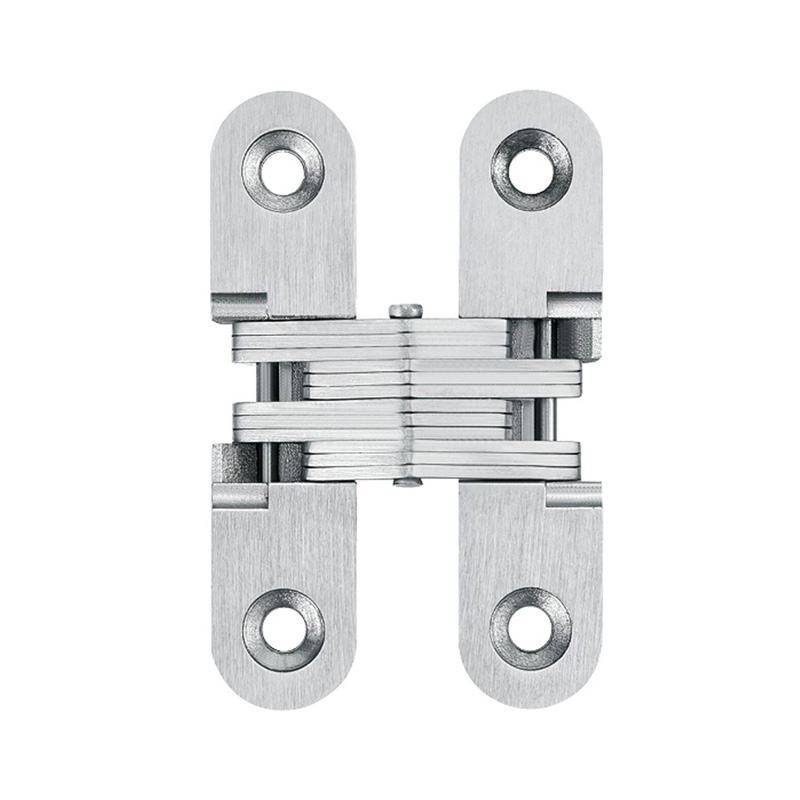
A concealed hinge is hidden because the main body sits in routed pockets inside the door and jamb. When the door is closed, the mechanism is not visible from either side, leaving only a clean door edge and frame line.
A typical concealed hinge system includes these core functional parts.
Hinge bodies for door and frame
Each side of the hinge has a housing that anchors into the door and the frame. These housings distribute load through the surrounding material rather than concentrating stress on surface screws.
Linkage arms or pivot elements
The motion is created by internal pivot points connected by arms. As the door opens, the linkage unfolds in a controlled path, keeping the door stable while moving it away from the frame.
Adjustment components
Many concealed hinges allow post-installation adjustment. This is essential because real doors and frames can vary slightly. Adjustment points let an installer correct gaps, alignment, and closing behavior without re-cutting the door.
Bearing and pin interfaces
Where movement occurs, the hinge relies on precisely fitted interfaces. This is one of the biggest factors behind smooth feel and long-term durability.
The concealed hinge works well when these parts are manufactured with consistent geometry, so the swing path is predictable and the door remains square to the frame across repeated cycles.
The key difference between a concealed hinge and a butt hinge is the door path. A butt hinge rotates around a visible pin and knuckle, with the door edge swinging around that axis. A concealed hinge uses an internal kinematic path created by pivots and arms. The mechanism moves the door in two actions at once.
It pulls the door away from the frame as it starts to open
This clearance step prevents edge rubbing and allows tighter reveals. It also supports modern designs with minimal gaps where a surface hinge might cause binding.
It rotates the door around a controlled internal axis
After the initial clearance, the linkage continues to rotate the door to the full opening angle. Because the pivot points are inside the housings, the hinge remains hidden throughout the entire movement.
This combined translation and rotation is why concealed hinges can support very clean visual design while still opening smoothly.
Many users notice concealed hinges can feel more refined when they are well made and correctly installed. That perception comes from controlled contact surfaces and reduced visible play.
The mechanism is protected from dust and accidental impact
Because the hinge is embedded, there is less exposure to knocks that can deform hinge leaves or loosen screws on surface hinges.
Load distribution is more balanced
A concealed hinge can spread forces through larger routed pockets and multiple anchor points, which can reduce localized wood crushing or screw pull-out over time.
Alignment is easier to tune after installation
Built-in adjustment capability reduces the need for improvised fixes such as bending leaves or forcing the frame.
For project buyers, these qualities are valuable because they translate to fewer site callbacks and more consistent door performance across multiple openings.
Concealed hinges are not just a design feature. They solve practical issues that matter to contractors, architects, and procurement teams.
Cleaner visual lines
When the door is closed, the hinge disappears. This supports modern minimal door design in hotels, offices, and high-end residential spaces.
Better tamper resistance
With the hinge hidden, it is harder to attack or remove from the outside. This can be helpful for certain doors where security and access control matter.
Controlled gap management
Because many concealed hinges allow adjustment, the door can be aligned to maintain even gaps at the top, hinge side, and latch side.
Improved durability under frequent cycling
A concealed hinge designed with stable pivot interfaces and consistent fit can hold alignment better as usage increases.
DESCOO focuses on manufacturing consistency and quality assurance so concealed hinge geometry stays stable. This is critical because small deviations in pivot spacing or housing alignment can change the swing path and installation outcome.
Adjustment is one of the strongest reasons concealed hinges are chosen for serious projects. After the hinge is installed, an installer can often fine-tune door position without removing the hinge.
Common adjustment directions include.
Side-to-side adjustment
This shifts the door closer or farther from the hinge jamb side, helping equalize gaps and align the latch with the strike.
Height adjustment
This raises or lowers the door slightly to correct sagging or uneven top gaps, especially important when the door weight is high.
In-out adjustment
This changes how the door sits relative to the frame stop, helping prevent latch-side rubbing and improving closing feel.
Different concealed hinge models implement adjustment differently, but the goal is the same: control the door geometry in three dimensions.
If you are sourcing hidden hinges for projects, DESCOO provides door concealed hinge options suitable for modern installations where post-install tuning is expected.
Concealed hinges are less forgiving of sloppy routing than surface hinges. A strong installation is based on accurate pocket cutting and correct fastener anchoring.
Accurate routing and pocket depth
The hinge housings must sit flush inside the door and jamb. If pockets are too shallow, the hinge will bind. If too deep, the hinge may lose support and allow movement.
Correct alignment of door-side and frame-side housings
Because the hinge uses an internal path, both sides must align with the designed pivot geometry. Misalignment can cause stiffness, uneven reveals, or incomplete closing.
Fastener selection and torque control
Fasteners must hold the hinge body firmly without stripping. Controlled torque prevents the housing from creeping during tightening.
Material strength around the pockets
The door and frame must have sufficient material thickness to support routing pockets and anchor points. Hollow or weak edges may need reinforcement planning.
A concealed hinge works best when manufacturing accuracy and installation accuracy meet in the middle. Consistent hinge dimensions help installers route accurately using templates and jigs.
A concealed hinge can look perfect on day one but drift if critical details are ignored. Buyers should evaluate the factors that protect long-term swing quality.
Pivot alignment stability
If pivot points are not aligned precisely, friction increases and wear accelerates.
Pin fit and movement smoothness
Loose fit can create play, while overly tight fit can lead to stiffness and squeaking. The correct balance is a manufacturing-controlled outcome.
Corrosion resistance
In humid or coastal environments, corrosion can increase friction and compromise smooth operation. Proper material and finish selection matters.
Load rating suitability
Using a hinge that is underspecified for the door weight causes earlier wear and alignment drift. For heavy doors, correct hinge selection and hinge quantity are essential.
DESCOO’s production approach emphasizes repeatability, which helps procurement teams maintain performance consistency across batches in project supply.
| Category | Concealed hinge | Traditional butt hinge |
|---|---|---|
| Visibility | Hidden when door is closed | Visible knuckle and leaves |
| Swing path | Internal linkage creates a controlled path | Rotates around a visible pin |
| Post-install adjustment | Often supports multi-direction tuning | Usually limited without re-mortising |
| Aesthetics | Minimal, modern appearance | Classic, visible hardware |
| Security | Harder to tamper from outside | Hinge pin can be exposed |
| Installation | Requires precise routing | Typically simpler surface mortise |
This comparison clarifies why concealed hinges are often chosen for modern premium doors, while butt hinges remain popular for general-purpose installations.
When sourcing concealed hinges, focus on project realities, not only appearance. Consider door weight, frequency of use, door thickness, frame structure, and environment. Also consider how much on-site adjustment flexibility you need. If your projects require clean aesthetics and reliable alignment, selecting a concealed hinge system with consistent manufacturing and stable geometry is critical.
DESCOO provides door concealed hinge solutions for buyers who need hidden hardware that supports smooth operation, installation efficiency, and long-term stability.
A concealed hinge works by embedding hinge housings inside the door and frame and using an internal linkage to move the door through a controlled path. The mechanism pulls the door away for clearance and then rotates it to the required opening angle, all while remaining invisible when the door is closed. When the hinge is manufactured with stable geometry and installed with accurate routing, it delivers clean design lines, adjustable alignment, and dependable long-term performance. For projects that demand modern aesthetics and consistent door operation, DESCOO concealed hinges provide a practical, quality-focused solution.