
concealed door hinges are widely used in modern architectural doors because they provide a clean appearance, protect hardware from tampering, and allow smoother door lines without visible hinge knuckles. A common question from buyers and project teams is whether concealed hinges can open to 180 degrees. The practical answer is that many concealed hinges are engineered to reach 180 degrees, but not all models can, and the actual opening angle depends on several factors beyond the hinge itself.
This guide explains what makes 180-degree opening possible, how to check hinge specifications, what door and frame conditions can reduce the swing angle, and how to select concealed hinges for full-access openings in real construction environments. For reference to concealed hinge configurations and options, you can view this category: door concealed hinge.
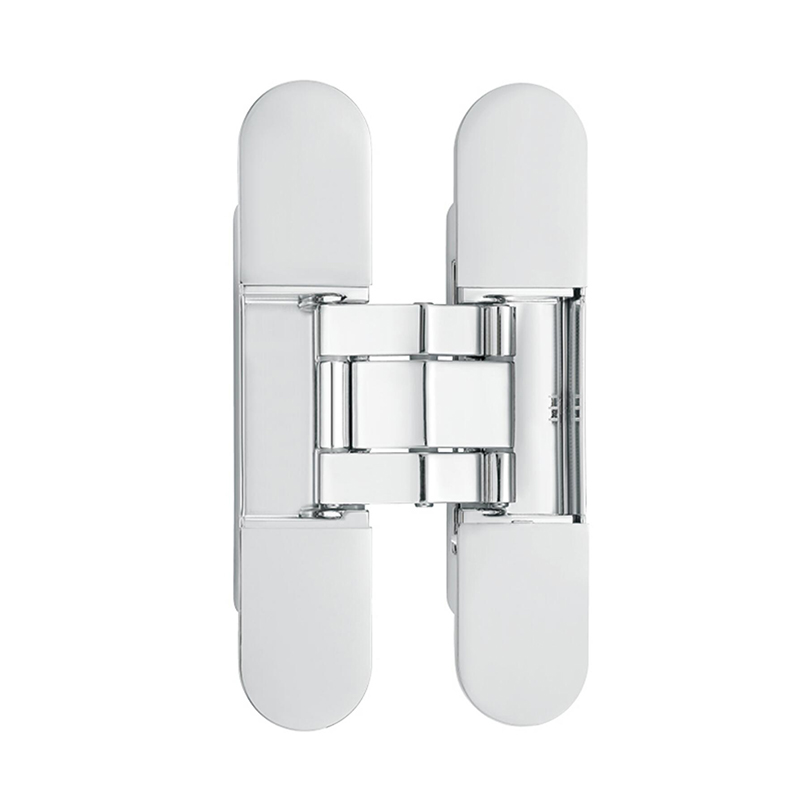
Concealed hinges can be designed for different maximum opening angles, commonly including 90 degrees, 120 degrees, 135 degrees, and 180 degrees. A hinge labeled 180 degrees usually means the hinge geometry allows the door leaf to rotate until it is nearly aligned with the wall plane, providing a wide opening for accessibility, moving furniture, or maximizing passage width.
However, even a hinge engineered for 180 degrees may not achieve it on every door because swing angle is a system outcome. The hinge sets the theoretical maximum, but the door thickness, door edge detail, frame profile, reveal gaps, and any seals or stops can limit the actual angle.
A reliable rule for buyers is: confirm the hinge model’s rated opening angle first, then confirm the door and frame conditions can physically allow that angle without contact.
A concealed hinge reaches 180 degrees when hinge geometry and installation clearances are compatible with full rotation. The following factors are the most common reasons a door does not open as far as expected.
Concealed hinges use internal pivot links rather than a visible hinge barrel. The link length, pivot location, and travel path determine the maximum swing. Hinges designed for 180 degrees typically have a geometry that moves the door leaf away from the frame during opening, preventing early collision.
Thicker doors increase the chance of edge-to-frame interference. If the hinge pocket and pivot position are not designed for the specific door thickness, the door edge may contact the frame or stop before reaching 180 degrees.
Some frames have a deep stop, a narrow reveal, or a profile that blocks the door edge during opening. This is common in certain metal frames or wood frames with thick stops. Even with a 180-degree hinge, the frame can become the limiting factor.
Weather seals, intumescent seals, and acoustic gaskets can add friction and physical thickness in the reveal. If the gap is tight, the seal may compress during opening and reduce the maximum swing.
Closers, floor springs, overhead stops, and hold-open arms sometimes restrict swing angle to protect walls or furniture. In these cases, the hinge can allow 180 degrees but the control hardware sets the real limit.
For project purchasing, you should confirm 180-degree performance using specification-level checks rather than visual assumptions.
Practical confirmation steps:
Check the hinge datasheet or product listing for a stated maximum opening angle
Do not assume a concealed hinge is 180 degrees because it looks larger or heavier.
Confirm whether the angle rating depends on door thickness range
Many concealed hinges specify a compatible door thickness range. If your door falls outside the range, the angle rating may not apply.
Review the required mortise dimensions and pivot offsets
A 180-degree hinge may require specific pocket depth and positioning. Improper pocket placement can reduce angle or create binding.
Verify whether the hinge is left/right universal or handed
Some concealed hinges require correct handing for smooth full rotation. Wrong handing can cause early interference.
Confirm whether the hinge includes an integrated stop
Some models include an internal stop angle. If a stop is built in, the hinge will not exceed it regardless of frame clearance.
When you need concealed hinge options with clear configuration guidance, you can reference the available category here: door concealed hinge.
Even when the hinge is rated 180 degrees, site conditions can reduce the achievable swing. The most frequent causes appear during installation or after the door is hung.
If the hinge leaf is not seated flush or the pocket is slightly offset, the hinge links may bind. Binding increases friction and can stop the door early. It also accelerates wear and can cause squeaking.
A tight gap may look clean, but it can reduce swing and create edge rubbing. For doors requiring 180 degrees, the reveal must support both sealing needs and full rotation clearance.
At large opening angles, the door edge and corner path changes. If the frame stop is thick or the profile is square, the door corner may hit the frame before 180 degrees.
Perimeter seals and corner seals can create physical resistance. If the seal is thick and the corner radius is small, interference happens earlier than expected.
If the door is slightly warped or the hinge mounting is uneven, the hinge axis can tilt, reducing clearance and limiting swing. This is why hinge selection should consider door weight and the number of hinges required.
When 180-degree opening is a requirement, selection should be based on measured project conditions rather than a generic hinge choice.
A practical checklist includes:
Confirm the required maximum opening angle for the space
Some corridors or room layouts only benefit from 135 degrees, while accessibility-focused doors may need 180 degrees.
Match hinge rating to door thickness and weight
Door thickness and weight determine both clearance and load. Heavy doors may require specific hinge models and additional hinge quantity.
Confirm frame profile compatibility
If the frame has a deep stop or a narrow reveal, a hinge designed for full swing may still be restricted. Review frame drawings where possible.
Plan for seals and fire requirements early
Acoustic and fire seals affect clearances. Confirm that 180-degree opening remains possible after seals are applied.
Decide whether you need integrated adjustment features
Many concealed hinges offer 3D adjustment to correct alignment. Adjustment helps maintain smooth swing over time, especially on project doors with heavy usage.
If you are selecting concealed hinges for architectural doors and need models that support wide-angle openings and installation guidance, review options here: door concealed hinge.
A 180-degree opening angle is not always necessary, but it becomes valuable in certain building layouts and usage patterns.
Common scenarios include:
Hotel rooms and hospitality spaces where wide access improves housekeeping workflow and furniture movement
Commercial offices that require maximum usable doorway width for equipment transport
Residential high-end interiors where flush doors and clean sightlines are combined with full opening access
Accessibility-focused doors where full swing supports smoother passage and reduces obstruction
Utility and service doors where maintenance access requires the door to open fully against a wall
When 180-degree opening is a functional requirement, hinge selection should be treated as part of door system design rather than a decorative choice.
Descoo provides concealed hinge solutions designed for architectural doors where clean aesthetics, stable performance, and practical installation outcomes are important. For projects that require wide-angle opening, selection accuracy and installation consistency are critical, because a hinge can only deliver its rated angle when door and frame conditions support it.
Our service approach focuses on:
Project-oriented support for doors in hospitality and construction applications
OEM and customization service supported by a professional team
Installation guidance to reduce alignment issues and on-site rework
Problem-solving support when door thickness, frame profile, or seal requirements affect swing angle
Solution-based hinge supply aligned with real door structures and usage intensity
To explore concealed hinge options intended for modern door systems, reference this category: door concealed hinge.
Yes, concealed door hinges can open 180 degrees, but only when the hinge model is engineered for 180-degree travel and the door system provides enough clearance for full rotation. The hinge’s rated opening angle is the starting point. The real result depends on door thickness, frame stop geometry, reveal gaps, seals, and installation accuracy.
If 180-degree swing is required for access, workflow, or space planning, the most reliable approach is to confirm the hinge’s angle rating, match it to the door thickness and weight, and verify frame and seal compatibility before procurement. When these elements are aligned, concealed hinges can deliver a clean appearance and wide opening performance that supports both design goals and long-term functionality.