
Concealed hinges deliver a clean, modern door appearance because the hinge is hidden when the door is closed. But concealed hinges are less forgiving than traditional butt hinges when it comes to placement. If hinge positions are off by even a small margin, you can end up with door sag, rubbing at the head or latch side, uneven reveal gaps, or adjustment limits that cannot fully correct the issue later.
This guide explains where concealed hinges should be placed on a door, how to choose hinge quantities and spacing, what factors change the recommended positions, and how to avoid common installation mistakes. For concealed hinge configurations commonly used in architectural doors, you can reference this category: door concealed hinge.
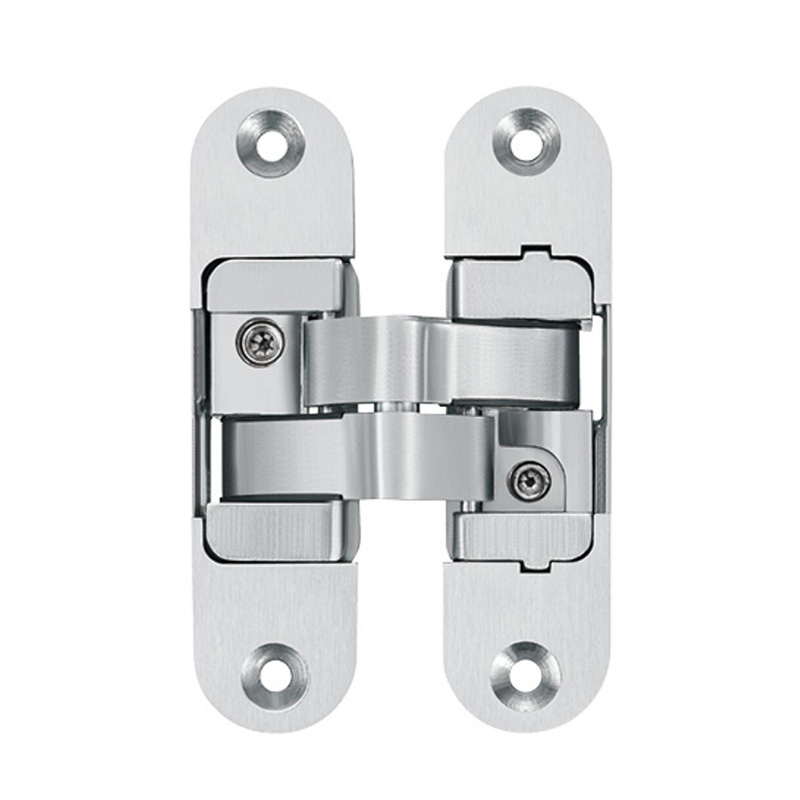
A door is a lever. Its weight creates bending force that tries to pull the top hinge away from the frame and push the bottom hinge into the frame. Concealed hinge placement is about managing that force so the door stays aligned.
Two placement goals matter most:
Keep the top hinge close enough to the top of the door to reduce sag and maintain the head reveal.
Place the bottom hinge at a height that stabilizes the door and reduces latch-side rubbing when the door swings.
In practice, most door alignment problems are not caused by hinge quality alone. They are caused by hinge placement, incorrect mortise routing, or wrong hinge quantity for the door weight.
Instead of using a single universal measurement, installers use placement zones. The exact distance depends on door height, hinge load rating, and project standards, but the logic stays consistent.
Common positioning approach:
Top hinge: placed near the top to resist sag
Bottom hinge: placed above the bottom to stabilize swing
Middle hinge: placed to distribute load and reduce twist, used when door size or weight increases
A practical baseline for many interior architectural doors is:
Top hinge located roughly 150–250 mm from the top edge
Bottom hinge located roughly 200–300 mm from the bottom edge
Middle hinge centered or slightly above center depending on door height and usage frequency
These ranges provide a starting point, but final placement must reflect door weight, door height, and hinge capacity. If you are working on heavy doors or high-traffic doors, hinge quantity and spacing should be planned as a system.
Hinge count is as important as hinge location. Too few hinges overload each hinge, increasing sag risk. Too many hinges can create binding if alignment is not precise, especially on concealed systems with tight geometry.
The table below provides practical guidance. Actual selection should reference the hinge’s load rating and the door construction.
| Door condition | Typical hinge count | Why it matters | Placement guidance |
|---|---|---|---|
| Standard interior door, moderate weight | 2 | Basic support for normal use | Top and bottom hinge within typical zones |
| Taller door or higher traffic | 3 | Reduces sag and improves long-term alignment | Add middle hinge above center if door is tall |
| Heavy door, frequent use, or closer installed | 3 or 4 | Distributes load and reduces hinge wear | Use 4 hinges for heavy doors to reduce per-hinge load |
| Very tall or wide doors, premium architectural doors | 4 or more | Prevents twist and keeps reveals consistent | Follow project engineering standards and hinge rating |
Spacing principle:
The top hinge carries the most stress in resisting sag.
Adding a third hinge reduces the load on the top hinge and helps control twist.
A fourth hinge is often justified when door weight is high or when door closers increase dynamic forces.
If you are specifying concealed hinges for architectural door projects and need options that support different door sizes and loads, you can review the available category here: door concealed hinge.
Once you decide the number of hinges and approximate zones, the next step is accurate marking and routing. Concealed hinges require precise pocket placement because the hinge body must sit flush in both the door and the frame.
A reliable marking process:
Establish reference lines
Use the top edge of the door as your primary reference. Mark all hinge positions from the same reference to avoid cumulative measurement errors.
Mark hinge centerlines
Instead of marking pocket edges first, mark the hinge centerline location. Many concealed hinge templates reference the centerline for repeatability.
Transfer marks to the frame
Hinge position on the door must match the frame exactly. Use a door-in-frame marking method or a positioning jig to ensure alignment.
Confirm reveal gaps before routing
Check your planned reveals at the head and jamb. If the reveal plan is not correct, hinge pocket placement may not fix it later.
Route pockets with a template
Concealed hinges perform best when pockets are routed with a dedicated jig. Freehand routing often causes uneven depth, which leads to hinge binding and limited adjustment range.
Practical checkpoint:
Pocket depth should allow the hinge leaf to sit flush without forcing. If the hinge is proud, the door will not close cleanly. If the pocket is too deep, the hinge may loosen or the door may shift.
Even if you use standard zones, several project factors can require adjusting hinge location or hinge count.
Door closers add repeated force and increase stress on the hinge system. For closer-equipped doors, placing the top hinge slightly closer to the top edge and adding an extra hinge is often beneficial for long-term stability.
Fire doors and acoustic doors are often heavier and may require seals that tighten the reveal. This increases the importance of correct hinge quantity and precise pocket routing. Poor placement can lead to seal compression issues and latch-side rubbing.
Very tall doors can twist, especially if the door core is not rigid enough. In these cases, hinge placement may shift slightly to better control twist, and a 4-hinge layout may be used to maintain consistent reveals.
Metal frames and deep stops can limit hinge geometry and adjustment. Ensure your hinge model is compatible with the frame profile and that pocket depth and offsets match the frame thickness.
Concealed hinge issues often show up as rubbing, uneven gaps, or poor closing. Most problems trace back to a short list of avoidable mistakes.
Top hinge placed too low
This increases leverage and accelerates sag, often creating head rubbing and latch-side misalignment.
Hinges spaced evenly without considering load
Equal spacing may look neat but does not always control sag as effectively as a layout that prioritizes top hinge performance and places the middle hinge strategically.
Pocket routing depth inconsistent between door and frame
Even small depth differences can cause binding or reduce adjustment ability.
Using too few hinges for the door weight
This overloads the hinge, increases wear, and reduces long-term alignment stability.
Not planning for seals and hardware clearance
Seals can reduce swing clearance and affect closing. Plan reveal gaps and confirm hinge travel early.
A concealed hinge system should feel smooth and stable. If the door feels tight only near the end of closing, it often indicates pocket depth inconsistency or reveal misplanning.
Descoo supports concealed hinge applications for architectural doors with a project-oriented approach focused on consistent installation outcomes. Correct hinge placement is not only about the hinge product but also about matching hinge configuration to door weight, door height, frame structure, and real usage intensity.
Our support includes:
Project-oriented selection support for doors in hospitality and construction applications
OEM and customization service supported by a professional team
Installation guidance to help reduce hinge placement errors and routing rework
Problem-solving support for frame profile, door thickness, and reveal clearance challenges
Solution-based hinge supply aligned with door structure and long-term stability requirements
For reference to concealed hinge configurations and options, view this category: door concealed hinge.
Concealed hinges should be placed with the goal of controlling sag and maintaining consistent reveal gaps over time. In most cases, the top hinge should be positioned relatively close to the top edge of the door to resist sag, the bottom hinge should stabilize the door above the bottom edge, and additional hinges should be added as door height, weight, and usage intensity increase.
The most reliable process is to choose hinge quantity based on door weight and traffic level, use proven placement zones as a baseline, and route pockets precisely using templates so the hinge sits flush in both the door and frame. When hinge placement, door structure, and hinge selection are aligned, concealed hinges deliver the clean appearance buyers want with the stable performance installers need.