
The concealed hinge can hold anywhere from a moderate interior door load to heavy-duty architectural door weight, but there is no single universal number. The true load capacity depends on the hinge size and internal structure, the door weight and width, the number of hinges used, and how well the hinge is installed into stable materials. In real projects, failures rarely come from one overload event. They come from repeated cycles, poor screw bite, misalignment, and door sag that increases stress over time.
This guide explains how concealed hinge load capacity is determined, what typical ranges look like, and how to select the right concealed hinge configuration for your door. DESCOO supplies concealed hinge solutions engineered for consistent performance in residential and commercial openings. You can view the product here: door concealed hinge.
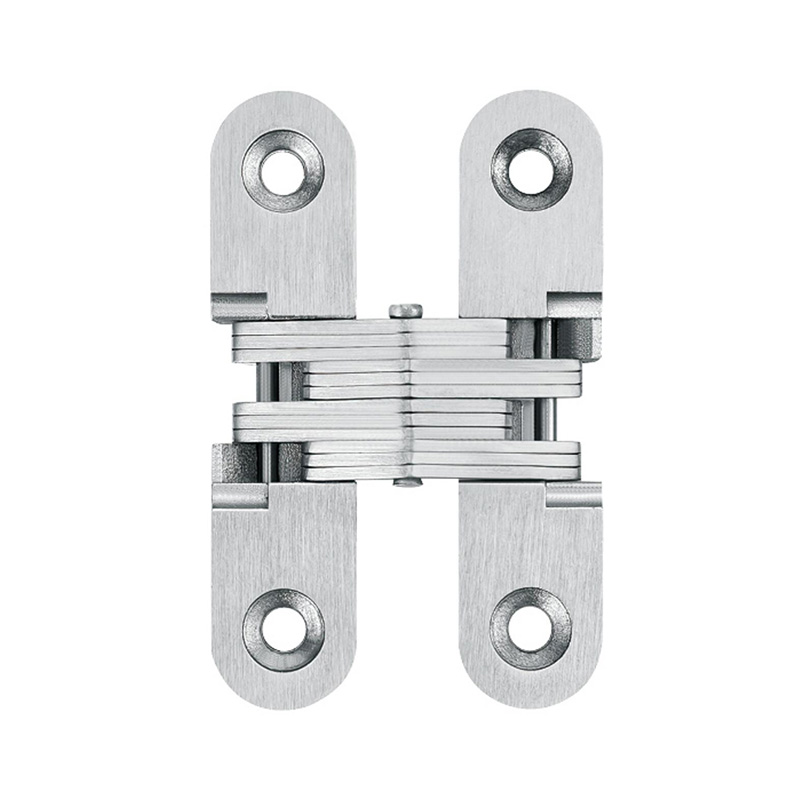
When people ask how much weight a concealed hinge can hold, they often imagine a simple vertical load limit. In practice, hinges resist multiple forces at once.
A concealed hinge must handle:
Vertical load from door weight pulling downward
Bending moment from door width creating leverage at the hinge side
Torsion from users pushing the door at the handle side
Dynamic impact from slamming or fast closing
Long-term fatigue from tens of thousands of opening cycles
Because width and usage increase leverage, two doors with the same weight can stress the hinge very differently. A narrow solid-core door and a wide door of equal weight will not behave the same on the hinge line.
Concealed hinges are selected as a system, not a single part. Capacity is shaped by both hinge design and door conditions.
Main capacity drivers include:
Hinge size and internal bearing structure
Larger hinges and stronger internal components generally handle higher moment and cycle stress.
Door weight and door width
Weight adds vertical load, width increases leverage and accelerates sag if under-supported.
Number of hinges and hinge spacing
More hinges distribute load and reduce stress on the top hinge, which typically carries the highest moment.
Door material and frame material
A hinge can only perform as well as the substrate holding the screws. Weak wood, hollow frames, or thin metal without reinforcement reduce real load capacity.
Screw type, length, and engagement depth
Short screws or poor thread bite cause gradual loosening, which turns into sag and accelerated wear.
Alignment and installation precision
Misalignment creates friction and uneven load distribution, increasing stress and reducing cycle life.
Usage intensity
High-traffic doors experience more dynamic force and need higher safety margin than low-use doors.
If the opening includes a door closer, heavy seals, or strong latching hardware, the hinge sees higher repetitive force, so the practical capacity target should increase.
Manufacturers rate concealed hinges differently based on their designs and testing methods, so you should always confirm the rating of the exact hinge model. Still, practical ranges help set expectations during planning.
Common real-world ranges:
Light-duty concealed hinges
Often used for interior doors with moderate weight and standard width
Medium-duty concealed hinges
Suitable for heavier interior doors and moderate-traffic applications
Heavy-duty concealed hinges
Designed for heavier doors, wider panels, and higher cycle demands
A useful planning approach is to treat door weight as only the starting point, then add margin for width and traffic.
This table is a practical guideline for typical interior door configurations. Final selection should be confirmed against the hinge model rating and door geometry.
| Door weight range | Standard width door | Wider door or higher traffic | Recommended hinge count |
|---|---|---|---|
| Up to 40 kg | Works well in many interiors | Add margin if used frequently | 2 to 3 hinges |
| 40 to 60 kg | Typical solid-core interior doors | Prefer more hinges for stability | 3 hinges |
| 60 to 80 kg | Heavy interior or semi-commercial | Higher stress from leverage | 3 to 4 hinges |
| 80 to 120 kg | Heavy doors and demanding openings | Require high capacity design | 4 hinges or heavy-duty model |
If the door is tall, wide, or frequently slammed, choose the higher hinge count within the band.
A simple and reliable way to prevent sag is to evaluate the bending moment and distribute it correctly through hinge quantity and spacing. You do not need complex engineering math to make better decisions, but you should think beyond weight alone.
Practical steps that work:
Confirm door weight and door width
Use actual door specifications rather than estimates. Door weight can vary significantly by core type and face material.
Treat the top hinge as the critical point
The top hinge carries the largest bending moment. If you underspec the system, sag begins at the top.
Increase hinge count as width and traffic increase
Wider doors create more leverage. High use creates more dynamic stress.
Use closer hinge spacing near the top
Keeping the top hinge near the top edge improves resistance to sag and reduces long-term loosening.
If you are sourcing for a project buyer team, standardizing door weight bands and hinge count rules helps maintain consistent performance across many openings.
Many hinge failures are installation failures. A hinge rated for high load can still underperform if screw bite and alignment are not controlled.
Load-critical installation practices:
Use correct routing depth and clean mortise geometry
Uneven routing twists the hinge body and creates friction.
Ensure full screw engagement into solid material
Reinforced frame zones or solid blocking behind the frame dramatically improve holding strength.
Use appropriate screw length and thread type for the substrate
The goal is high pull-out resistance and long-term vibration stability.
Confirm hinge axis alignment across all hinges
Misalignment forces the door to fight itself during swing, increasing wear and reducing effective capacity.
Set consistent gaps and avoid hinge preload
Doors installed with tension at the hinge line accelerate loosening and create uneven stress.
Re-check and re-torque after initial cycles
Some settling is normal. A controlled re-check prevents early looseness from turning into permanent sag.
These controls often matter more than moving from one capacity class to the next.
You should increase hinge support when the door geometry and usage increase stress faster than a standard setup can handle.
Clear signals you should upgrade:
Door width is larger than standard interior sizes
Door weight is high due to solid-core construction, metal skin, or added acoustic layers
The opening is high-traffic and will cycle heavily
A door closer is installed or strong seals increase closing force
The door is tall, creating higher leverage across the hinge line
You require tight long-term alignment for premium aesthetics and latch consistency
If your application needs a stable reveal line and consistent latch behavior for years, selecting higher hinge capacity and hinge quantity early is usually more cost-effective than correcting sag later.
DESCOO focuses on concealed hinge solutions built for consistent door alignment, smooth operation, and stable long-term use across real installation conditions. For contractors and procurement teams, what matters is not only the rated capacity, but also repeatability in production, dimensional consistency, and practical installation support that reduces alignment errors.
DESCOO provides concealed hinges that fit modern door systems and help maintain clean door lines with controlled movement. This is especially valuable for commercial-grade projects where multiple doors must perform consistently and where bulk order planning depends on stable specifications across batches. Explore the product here: door concealed hinge.
How much weight a concealed hinge can hold depends on more than a single rating. Door weight, door width, hinge quantity, installation quality, substrate strength, and usage intensity all determine real performance. A practical approach is to confirm the hinge model rating, add margin for wide or high-traffic doors, use sufficient hinge count, and control installation precision so the hinge can deliver its designed capacity.
With a properly selected and correctly installed concealed hinge system, doors stay aligned, operate smoothly, and resist sag over long service cycles.
Previous: Why Use Concealed Hinges?