
Concealed hinges are chosen when a door needs clean aesthetics, stable alignment, and controlled performance without exposed hardware. Unlike traditional butt hinges that remain visible when the door is closed, concealed hinges sit inside the door and frame, creating a flush, minimalist look while also supporting modern requirements such as multi-direction adjustment, tamper resistance, and smoother operation across repeated cycles. For residential interiors, concealed hinges help achieve a premium finish. For commercial and project installations, they can reduce call-backs by allowing installers to fine-tune alignment after the door settles.
This article explains why concealed hinges are used, what problems they solve, and how to evaluate them for different door systems. DESCOO supplies concealed hinge solutions engineered for reliable long-term performance. You can view the product here: door concealed hinge.
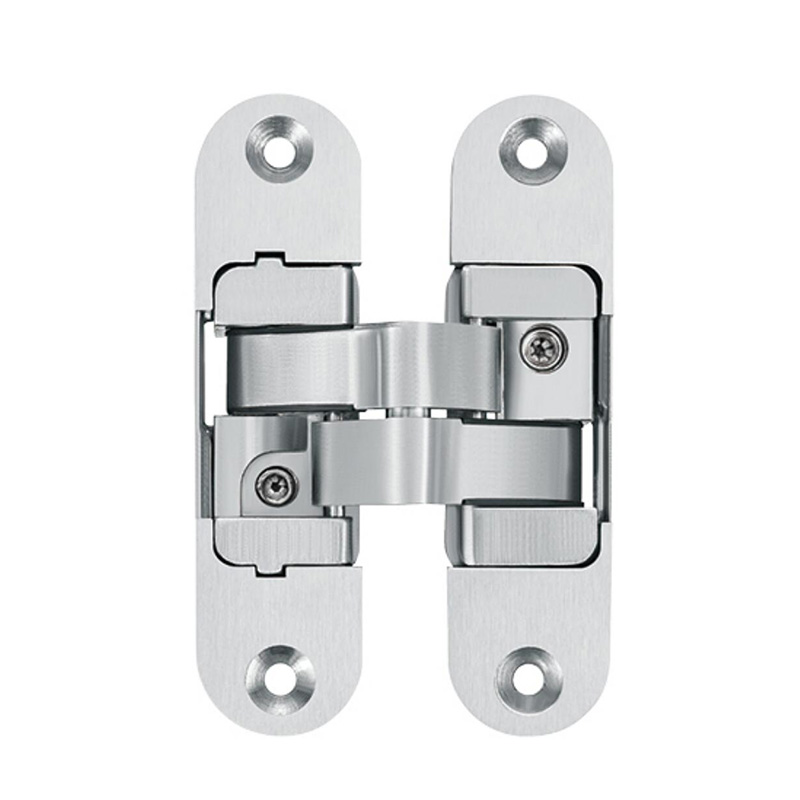
One of the most direct reasons to use concealed hinges is visual simplicity. When the door is closed, the hinge is not visible, so the door leaf and frame present an uninterrupted surface line. This matters for modern architectural doors, minimalist interiors, and any project where designers want hardware to disappear rather than become a focal point.
Practical aesthetic advantages include:
Cleaner sightlines on premium doors and wall panels
Better consistency across rooms where different door swing directions exist
Improved compatibility with flush walls, hidden frames, and modern trim styles
A more unified appearance with magnetic locks, hidden closers, and modern handles
If the goal is a high-end finish where door components do not compete visually, concealed hinges are a straightforward solution.
Traditional hinges often require manual shimming, hinge bending, or re-mortising to correct alignment issues. Concealed hinges commonly provide adjustment in multiple directions, allowing installers to correct the reveal line, door height position, and compression against seals with more precision.
Why this matters in real installations:
Doors and frames can settle after installation due to building movement or humidity
Heavy doors can develop slight sag over time if load is not distributed perfectly
Finish layers and flooring changes can affect door clearance
Seal compression requirements can change swing feel and latch behavior
Adjustment capability supports long-term door performance because alignment can be restored without rebuilding the frame. This is valuable for project buyer teams managing multiple openings where small tolerances need to remain consistent across a whole building.
When a hinge is hidden inside the door and frame, it is far harder to tamper with from the outside. Exposed hinge pins on traditional designs can be targeted in some applications, especially on outward-opening doors. Concealed hinges reduce this vulnerability because the hinge components are not accessible when the door is closed.
Security-related benefits include:
Reduced opportunity for pin removal or hinge-side attacks
Cleaner integration with security doors and controlled access openings
Better compatibility with modern locking systems that rely on tight alignment
For doors used in commercial corridors, offices, or higher-security rooms, concealed hinges can be part of a broader secure hardware strategy.
In many environments, exposed hinges create snag points. Bags, clothing, cords, and cleaning equipment can catch on hinge knuckles or hinge edges. Concealed hinges remove the protruding external hinge profile, which helps reduce minor accidents and wear.
Functional advantages that show up in daily use:
Less snag risk for bags and clothing in narrow hallways
Easier cleaning around the hinge area because the exterior is smooth
Reduced contact damage when doors open near walls, cabinets, or furniture
Better suitability for modern door frames with tight architectural lines
This is especially useful in hospitality, offices, and residential projects where doors sit close to cabinetry or decorative wall panels.
Concealed hinges are often selected because they integrate well with modern design requirements that traditional hinges struggle to support. These include thick doors, pivot-like aesthetic expectations, flush frames, and doors with advanced acoustic or sealing requirements.
Concealed hinges can support:
Thicker doors where a cleaner hinge-side line is required
Doors with perimeter seals that need controlled compression
Premium finishes where exposed hardware would disrupt the design
Modern frames designed for minimal shadow lines and tight tolerances
Because concealed hinges sit inside the structure, they often allow designers to maintain consistent exterior geometry even when the internal door build-up becomes more complex.
Concealed hinges solve specific problems, but they are not the best option for every door. Selection should match the door type, frame material, and installation conditions.
Concealed hinges are often the right choice when:
You want a clean, premium look with no visible hardware
You need alignment adjustability after installation
The door is used in a high-traffic area and must maintain consistent closing behavior
The door system includes seals, closers, or modern lock components that need precise alignment
The project requires tamper resistance for the hinge side
They may not be ideal when:
The door and frame cannot support accurate routing and installation
The project is highly cost-sensitive and does not need adjustability or hidden aesthetics
The installer cannot maintain the required precision for hinge pocket preparation
The decision should be based on the total door system performance rather than hinge type alone.
| Decision Factor | Concealed Hinges | Traditional Exposed Hinges |
|---|---|---|
| Appearance | Hidden when door is closed | Visible hinge knuckles and plates |
| Alignment control | Often multi-direction adjustable | Usually limited, relies on shimming |
| Tamper resistance | Higher when door is closed | Depends on hinge pin design |
| Snag and cleaning | Smooth exterior, fewer snag points | External hinge area can snag and collect dirt |
| Installation requirements | More precise routing and setup | Generally simpler preparation |
| Best-fit applications | Modern, premium, and performance-driven doors | Standard doors and basic installations |
This comparison helps buyers select based on performance requirements rather than preference alone.
DESCOO supplies concealed hinge solutions designed for stable alignment, smooth movement, and consistent long-term performance. In real-world projects, installers and procurement teams need hinges that are dimensionally consistent, reliable across repeated cycles, and practical to adjust during installation and service. DESCOO focuses on manufacturing stability and product consistency so doors can maintain clean reveal lines and predictable swing behavior across multiple openings.
For commercial-grade deployments and bulk order programs, consistent hinge specifications help reduce on-site variability and simplify maintenance planning across large projects. Explore the product here: door concealed hinge.
Concealed hinges are used because they combine clean aesthetics with practical performance benefits. They hide hardware for a premium look, support multi-direction adjustment for long-term alignment, improve tamper resistance when the door is closed, reduce snag points, and integrate well with modern door systems that rely on tight tolerances.
When selected and installed correctly, concealed hinges help doors stay aligned, operate smoothly, and maintain a high-end appearance over long service cycles, making them a strong choice for modern residential and commercial projects.