
A thumb turn lock is a simple, reliable way to provide privacy and controlled access on interior doors such as bathrooms, bedrooms, and meeting rooms. Instead of using a key on the inside, the user rotates a small knob or lever with the thumb to extend or retract the locking component. The design prioritizes fast, intuitive operation and repeatable performance over thousands of cycles, which is why thumb turns are widely used in residential and light commercial hardware systems.
This article explains how a thumb turn lock works from the inside out, the key components involved, common configurations such as indicator and emergency release styles, and practical selection tips for real projects. DESCOO supplies door accessories including thumb turns and related components engineered for consistent fit, finish, and function. You can explore the range here: door accessories.
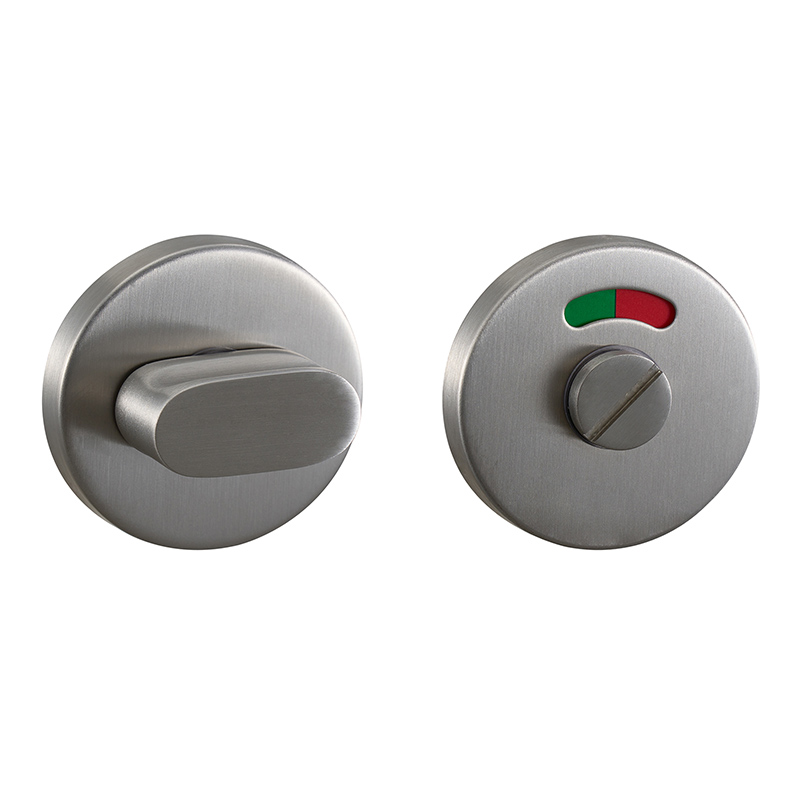
A thumb turn lock is an interior-side locking mechanism that can be operated without a key. The most common purpose is privacy control. The user turns the thumb piece to lock the door from inside, then turns it back to unlock when leaving. On the outside, the door may have an emergency release, a coin-slot release, a pin-hole release, or an indicator module depending on the hardware system.
Thumb turns are typically used in:
Bathroom doors where quick privacy control is required
Bedrooms or suites where locking should be intuitive from inside
Office meeting rooms where occupancy needs clear status
Hospitality interior doors where ease of use and durability matter
Multi-family or light commercial settings where standardized hardware simplifies maintenance
The simplicity of operation is the core advantage. There is no key to manage on the inside, and the mechanism is designed for high repeatability in daily use.
A thumb turn lock works by converting the user’s rotational input into linear motion of a locking element or rotational movement inside the lock body. The thumb piece is connected to a spindle or cam. When rotated, that spindle drives a deadbolt, latch-blocking component, or privacy function within the lock case.
The working sequence is consistent across most designs:
The user rotates the thumb turn through a defined angle
Rotation transfers torque to an internal spindle or cam
The cam moves the lock element into the locked position
A stop point or detent limits travel to prevent over-rotation
Returning the thumb turn reverses the movement to unlock
The system is built to provide a clear feel at the lock and unlock endpoints. That tactile feedback is important in bathrooms and guest spaces where users want immediate confirmation without looking.
Even though thumb turns look simple, the internal design controls smoothness, durability, and alignment. Understanding the main parts helps you evaluate product quality and troubleshoot issues.
Common internal components include:
Thumb turn actuator
The external thumb piece that provides user input. It can be round, oval, square, or lever-style depending on design.
Spindle or tailpiece
A connecting part that transfers rotation into the internal lock mechanism. Spindle accuracy is critical for smooth engagement.
Cam or follower
Converts spindle rotation into movement that locks the door. Cam profile affects the feel of turning and the stability of the locked position.
Locking element
Depending on the lock type, this may be a deadbolt, privacy plunger, or latch-blocking part that prevents the latch from retracting.
Return stops and detents
Control the turn angle and prevent over-travel. These parts reduce wear and keep operation consistent.
Mounting plates and fasteners
Keep alignment stable between the door faces. Poor mounting causes friction, wobble, and early loosening.
In better hardware systems, component tolerances and assembly stability determine whether the thumb turn remains smooth after long use or becomes loose and gritty.
Thumb turns are commonly paired with an outside-side module. The difference is not only appearance. It affects privacy messaging, safety access, and project standards.
This configuration focuses on basic privacy. The inside has the thumb turn. The outside typically has an emergency release slot or simple cover. It is common in residential interiors where occupancy signaling is not required.
An indicator module displays occupied or vacant status, often using a color window or mechanical flag. This is useful in hospitality and public restroom environments where user flow and clarity matter. The indicator is typically linked mechanically to the lock position, so it changes status when the thumb turn is rotated.
Many privacy locks include an exterior release that can unlock the door in an emergency using a coin slot, pin tool, or key-like turn device. The emergency release is independent of privacy, but it provides safety access when needed.
A project buyer selecting hardware for multi-room facilities typically chooses the configuration that matches code expectations and operational needs, especially for hospitality bathrooms and shared restrooms.
When thumb turn locks do not work well, the cause is usually alignment, door preparation, or component wear rather than the concept itself. A well-made thumb turn should turn smoothly with controlled resistance.
Common causes of stiffness or inconsistent locking:
Misaligned door prep or incorrect backset
If the spindle is not centered or the lock body is not seated correctly, friction increases and the thumb turn binds.
Door thickness mismatch
If the lock is designed for a certain door thickness range, incorrect spacing can cause the thumb turn to rub or the spindle to sit under stress.
Overtightening mounting screws
Excessive compression can distort mounting plates and increase friction in the actuator.
Latch or bolt interference with strike alignment
If the door is sagging or the strike is misaligned, the locking element meets resistance and the thumb turn feels stiff.
Wear from high-cycle use
In high-traffic facilities, worn detents or cams can create a loose feel and reduced endpoint clarity.
When hardware is standardized and installed with consistent prep, thumb turns typically provide long-term stable operation with minimal maintenance.
To select the correct thumb turn lock, treat it as part of a full door system rather than a standalone part. The goal is smooth operation, stable alignment, and consistent feel across the building.
Key selection criteria include:
Door type and usage frequency
High-traffic restrooms benefit from heavier-duty components and indicator visibility, while residential doors may prioritize aesthetics.
Door thickness and prep compatibility
Confirm the lock fits the thickness range and prep method used in your doors.
Outside-side requirement
Decide between standard cover, emergency release, or indicator module depending on operational needs.
Finish and corrosion needs
Bathrooms have humidity exposure, so finish stability matters, especially for satin stainless and coated finishes such as black.
Turning feel and stop accuracy
A good thumb turn has clear lock and unlock endpoints and stable detent behavior over time.
For facility rollouts and commercial-grade supply planning, consistent dimensions and stable production output are critical to avoid installation variation across multiple rooms.
DESCOO supplies door accessories designed around practical installation and long-term use expectations. For projects that require repeatable fit and stable operation, consistency across batches matters as much as the visual finish. DESCOO focuses on manufacturing stability, controlled component matching, and dependable assembly quality so thumb turn components maintain smooth rotation, stable endpoints, and predictable alignment.
For wholesale procurement and large-volume programs, standardized specifications simplify door prep and reduce on-site adjustment time. This helps project teams maintain consistent bathroom hardware performance across multiple doors. Explore the category here: door accessories.
A thumb turn lock works by converting a simple thumb rotation into an internal lock action through a spindle and cam mechanism. The user turns the thumb piece to move the locking element into position, creating privacy without needing a key on the inside. Variations such as occupancy indicators and emergency release modules expand the same core concept to meet different project needs.
When selected with the correct door prep and installed with proper alignment, thumb turn locks deliver reliable daily performance, intuitive operation, and consistent privacy control for bathrooms and interior doors.
Previous: Are Thumb Turn Locks Secure?