
Thumb turn locks are secure for their intended purpose, but they are not designed to be a primary high-security lock in the way a keyed deadbolt is. In most door systems, a thumb turn is part of a privacy or controlled-access function. It delivers fast interior locking, clear occupied status, and reliable daily operation. Security depends on how the thumb turn is used, what is installed on the outside of the door, how the lock body is constructed, and whether the door and frame provide real resistance to forced entry.
This article explains what thumb turn locks can and cannot protect against, which designs are more secure, and how to specify thumb turn hardware correctly for different environments. DESCOO provides door accessories and thumb turn components designed for stable fit, durable finishes, and repeatable performance. Explore options here: door accessories.
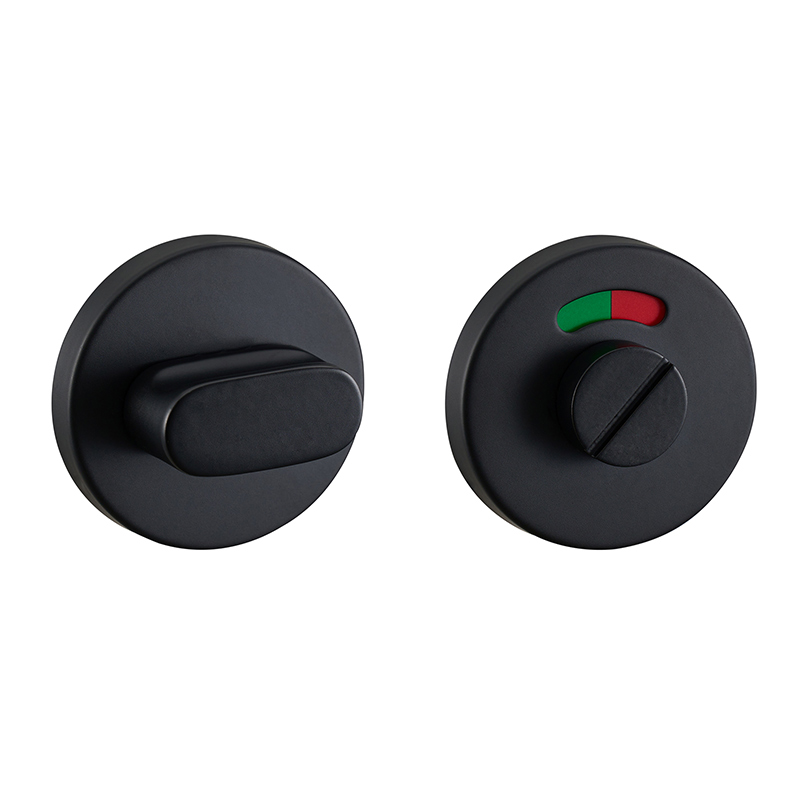
Before judging security, it helps to define the job of a thumb turn lock. In many bathrooms, bedrooms, and meeting rooms, the goal is not burglary resistance. The goal is privacy control, access discipline, and safe emergency entry if needed. A thumb turn accomplishes this by locking from the inside without a key, often paired with an exterior emergency release or indicator.
Security, in this context, usually refers to:
Preventing accidental entry during occupancy
Providing a clear locked or occupied status
Reducing casual tampering from outside
Maintaining stable locking function over repeated cycles
Allowing authorized emergency access when required by facility policy
If the project requires resistance to forced attack, the thumb turn is only one part of the solution. The lock case, the bolt type, the door construction, and the strike reinforcement become the decisive factors.
Thumb turn locks are highly effective in environments where privacy and controlled entry matter more than forced-entry protection. They work well when the threat model is casual entry or unintentional intrusion rather than targeted break-in.
They are typically secure enough for:
Residential bathrooms and bedrooms
Hotel guestroom bathrooms and connecting interior doors
Office meeting rooms and staff-only interior spaces
Multi-family interior rooms where occupants need quick privacy control
Public restrooms where the objective is occupancy protection and user flow
In these environments, the main security requirement is consistent operation: the lock must engage reliably, remain aligned, and resist loosening over time.
Thumb turns are often misunderstood because the inside operation feels decisive and immediate. However, many thumb turn sets are designed as privacy locks, not high-security locks. If the exterior side includes a simple emergency release slot or pin hole, it may be intentionally openable for safety reasons.
Thumb turn locks should not be treated as the only security layer for:
Exterior entry doors and perimeter doors
Doors protecting high-value assets or restricted inventory
Areas requiring access control audit and key management
High-risk locations where forced entry is a realistic concern
In these cases, a thumb turn may still be used inside as part of a deadbolt-style lock, but it must be paired with a secure exterior locking method, reinforced strike, and appropriate door/frame construction.
Two thumb turn locks can look similar yet behave very differently. Security is influenced by how the lock is built and how the outside side is configured.
Key design factors include:
Lock type: privacy function vs deadbolt function
Privacy locks often block the latch or engage a light-duty bolt. Deadbolt-style systems provide stronger resistance to forced opening when paired with a proper strike.
Exterior access method
Some bathroom thumb turns use an emergency release that can be opened from outside with a coin or pin tool. This is a safety feature, not a security feature. In higher-security interior applications, exterior operation is typically keyed or controlled.
Bolt throw and engagement depth
Deeper engagement into a reinforced strike provides better resistance than shallow latch blocking.
Anti-loosening construction and stable mounting
Hardware that loosens reduces security quickly because misalignment creates partial engagement and easier bypass.
Indicator integration
An indicator improves occupancy control but does not automatically increase forced-entry resistance. It increases practical security by preventing accidental entry.
If your goal is stronger protection, focus on lock case strength, bolt engagement, and exterior access design rather than the thumb turn shape.
A practical way to judge security is to match the lock to the risk.
Thumb turn locks protect well against:
Accidental entry when a room is occupied
Casual tampering that relies on quick handle testing
Uncontrolled door opening in shared indoor environments
Frequent-use wear problems when the lock is built correctly
Thumb turn locks do not fully protect against:
Forced entry using leverage or impact on weak doors and frames
Bypass if the exterior emergency release is intentionally accessible
Security failures caused by poor installation and weak strike reinforcement
Attack on the door itself, such as thin panels, weak frames, or poor hinges
In many cases, the weakest point is not the lock. It is the door/frame system. If the door core is light, the frame is thin, or the strike is not reinforced, improving the thumb turn alone will not deliver meaningful security gains.
To increase real security while still keeping the convenience of a thumb turn, focus on system specification and installation controls.
Practical specification steps:
Choose the correct lock function for the door role
Use privacy thumb turns for bathrooms and interior rooms, and deadbolt-capable systems where stronger resistance is required.
Control exterior access
In public or shared buildings, decide whether exterior emergency release is required for safety. If the door requires real access control, use a keyed exterior option rather than an open emergency slot.
Improve strike and frame engagement
Use reinforced strikes and ensure bolt or latch engagement is stable under door movement. Misalignment reduces security quickly.
Select durable materials and finishes for humid spaces
Bathrooms require corrosion resistance and stable finish quality to prevent mechanical degradation.
Standardize installation and verification
For commercial-grade rollouts and bulk order programs, consistent door prep and installation standards reduce the risk of loose mounting and misalignment across many doors.
This approach is especially useful for project buyer teams managing multiple rooms where both privacy control and operational reliability matter.
DESCOO provides door accessories designed to support stable locking performance and consistent installation results. In real buildings, security is often compromised by loose hardware, inconsistent dimensions, and misalignment across repeated installations. DESCOO focuses on manufacturing consistency, controlled component matching, and durable finishes so thumb turn components maintain reliable engagement and smooth operation over long service cycles.
For wholesale and commercial-grade procurement, stable specifications across batches help installers maintain consistent door prep and reduce rework. Explore DESCOO product options here: door accessories.
Thumb turn locks are secure for privacy control and controlled entry in interior environments, especially bathrooms, bedrooms, and meeting rooms. They are not automatically a high-security solution for forced-entry resistance, particularly when the exterior side includes an emergency release by design. Real security depends on the lock function, exterior access method, bolt engagement, installation quality, and the strength of the door and frame system.
When specified correctly and installed with stable alignment, thumb turn locks deliver practical, dependable security for their intended role while providing the convenience and fast operation that many interior doors require.