
Taking off a door handle is a straightforward job when you follow the right sequence and match the steps to the handle design. Most problems happen because people start removing parts before identifying how the handle is fastened, which can lead to scratched trim, stripped screws, or a latch that will not slide out. The safest approach is to work from the interior side, remove the handle hardware first, then remove the latch last. This keeps the door stable and prevents the internal mechanism from twisting while you work.
DESCOO supplies Door hardware in multiple structures and finishes for different installation needs. If you are replacing a handle after removal, you can compare options and compatible configurations in our door hardware products.
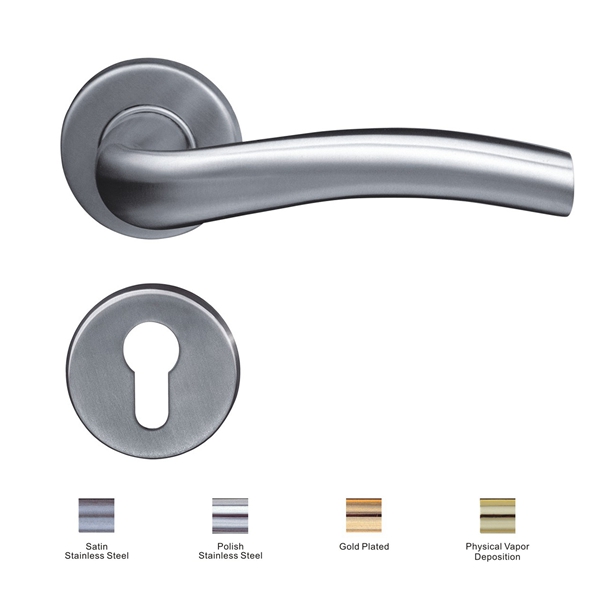
In most cases you only need a Phillips screwdriver. Some lever handles also require a small hex key, and a flat screwdriver is useful when a trim cover hides the mounting screws. Open the door and hold it in place with a doorstop so it does not swing while you loosen fasteners. Keep a small container nearby for screws, because mixing screw lengths is one of the most common reasons reassembly feels difficult.
If the door has been painted recently, check the edge of the trim plate and the latch faceplate. Paint can seal the trim to the door surface. Scoring the paint line lightly with a utility knife before you pry prevents chips and keeps the finish clean.
Before removing anything, look closely at the interior side of the handle. If you can see two screw heads on the interior plate, you have a visible-screw design. If the interior plate looks smooth with no screws, the screws are usually hidden under a decorative trim cover. For lever handles, also inspect the underside of the lever neck or hub. Many commercial and modern levers have a small set screw or a release pin hole that must be loosened before the lever can slide off the spindle.
This quick identification step determines whether you remove screws directly, remove a trim cover first, or release the lever before you can access mounting screws.
Visible-screw handles are common on interior doors and are usually the easiest to remove. Support the exterior handle with one hand, then loosen the two interior mounting screws gradually, alternating between them so the plate does not bind. Once the screws are out, the interior half will pull away, and the exterior half will slide out from the other side of the door.
After the handle halves are removed, move to the latch on the door edge. Remove the two screws on the latch faceplate, then pull the latch straight out. If it sticks, wiggle gently while pulling; forcing it sideways can damage the door edge opening.
Hidden-screw handles look cleaner because the mounting screws sit behind a cover. Start by finding the seam line around the interior trim cover. Some covers snap off, while others twist off. If it is a snap cover, use a flat screwdriver to lift it gently at the seam, protecting the finish with a thin cloth. If it is a twist cover, rotate it to release, then lift it away.
Once the cover is removed, you will see the mounting screws. Remove them evenly, separate the interior and exterior halves, then remove the latch from the door edge in the same way as above. If the cover resists removal, paint buildup is often the cause, and scoring the paint line usually solves the problem.
Many lever handles lock onto the spindle with a set screw. Look for a small screw head or hole under the lever neck. Insert the correct hex key and loosen the set screw several turns. When it is loose, slide the lever straight off. After the lever is removed, you can remove the trim cover if present, access the mounting screws, and separate the handle halves.
Some levers use a spring-loaded release pin instead of a set screw. In that case, press the pin through the small release hole while pulling the lever off. Once the lever is off, the remaining steps match the hidden-screw process: remove the cover, remove mounting screws, then remove the latch.
If the handle will not separate after screws are removed, the most likely causes are a trim cover still in place, a set screw not fully loosened, or misalignment tension. Re-check the lever hub for a set screw, then loosen both mounting screws evenly instead of removing one completely first. If a screw head is stripping, stop and switch to a better-fitting screwdriver bit, apply strong inward pressure, and turn slowly.
If the latch will not pull out, confirm both faceplate screws are removed and that paint is not sealing the faceplate to the door edge. A light score along the faceplate perimeter helps the latch slide out cleanly.
| Handle Style | What You See On The Interior Side | First Action |
|---|---|---|
| Visible-screw lever/knob | Two screws on the interior plate | Remove the mounting screws |
| Hidden-screw lever/knob | Smooth trim plate, seam line | Remove the trim cover first |
| Set-screw lever | Small hole/screw under lever hub | Loosen set screw, slide lever off |
| Release-pin lever | Small release hole/slot | Press pin, slide lever off |
To take off a door handle safely, identify the fastening method first, then remove hardware in the right order: handle halves first, latch last. Visible-screw designs come off by removing two interior screws, hidden-screw designs require removing the trim cover first, and many lever handles require loosening a set screw or pressing a release pin before the lever will slide off. Working slowly, protecting the finish, and keeping screws organized makes reinstallation or replacement much easier.
If you are replacing hardware for a renovation or a multi-door project, DESCOO can help you select compatible handle structures and finishes and share practical installation guidance. Browse our door hardware products and send your door thickness, backset, and handle style, and we will recommend suitable options for your application.