
Concealed hinges are widely used on modern cabinets because they create a clean exterior look and allow precise door adjustment after installation. A correct install is less about speed and more about accurate layout. When the cup hole position, hinge spacing, and mounting plate height are consistent, the door closes smoothly, the reveals look even, and long-term sagging is reduced. This guide walks through the full process in a practical order, from choosing the hinge type to final alignment.
DESCOO supplies cabinet-ready concealed hinge options for different door materials and opening angles. You can review specifications and styles on our concealed hinge product page.
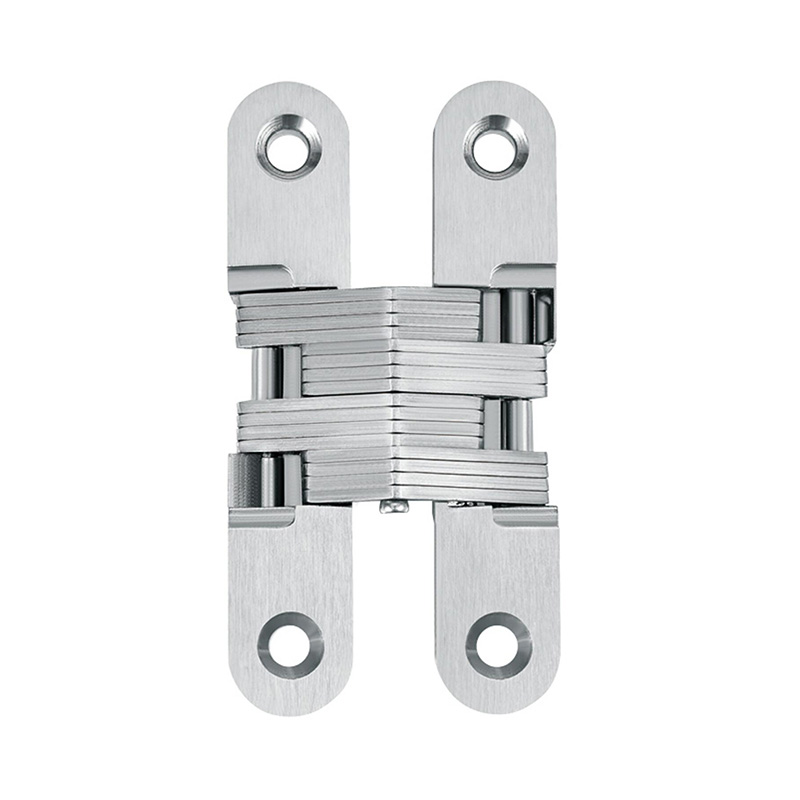
A concealed hinge system has two main parts: the hinge with a round cup that fits into the back of the door, and the mounting plate fixed to the cabinet side panel. Most common concealed hinges use a 35 mm cup and a two-screw cup fixing pattern. The hinge arm then clips or screws onto the mounting plate.
Before layout, confirm three decisions:
Overlay style: full overlay, half overlay, or inset, which determines where the door sits relative to the cabinet frame or side panel
Opening angle and features: standard angle, wide-angle, soft close, or clip-on convenience
Door thickness and material: typical doors are 16–22 mm, and the cup drilling depth must stay safe for the door thickness
These choices affect cup setback and mounting plate height, which directly control door alignment and gaps.
Accurate drilling is the difference between a professional result and a door that binds. Prepare tools that keep the cup hole centered and repeatable.
35 mm Forstner bit
Drill or drill press, plus a depth stop
Hinge drilling jig or template for consistent setback
Tape measure, square, pencil, and awl
Screwdriver or driver with clutch setting
The correct screws for door material and cabinet panel
For MDF or particleboard, pre-drilling screw pilot holes reduces splitting and helps screws hold better.
Hinge count depends on door height, thickness, and weight. Using too few hinges causes sagging and uneven reveals over time, especially for heavier doors or doors with accessories.
A common placement approach is:
2 hinges for most standard doors
3 hinges for taller doors or heavier door materials
Add hinges as height and weight increase to keep the door stable
Typical spacing places the top hinge near the top edge and the bottom hinge near the bottom edge, with extra hinges distributed evenly between them. Keep hinge positions consistent across a cabinet run for a uniform look.
Most concealed hinges use a 35 mm cup hole located a short distance from the door edge. That edge distance is often called the cup setback. The exact setback depends on hinge design and overlay requirement, so it is best to follow the hinge spec sheet. When you use a drilling jig, the setback becomes repeatable.
Mark these reference points on the back of the door:
The hinge centerlines based on your hinge spacing plan
The cup hole center position at the required setback from the door edge
Use a square to ensure marks are perpendicular to the door edge. Small angle errors become visible once the door is installed.
Cup holes must be flat-bottomed, clean, and consistent depth. The most common mistake is drilling too deep and breaking through the front of the door, especially on 16–18 mm doors.
Set a depth stop so the cup sits flush without weakening the door face. Drill slowly, keep the bit perpendicular, and clear chips as you go so the hole stays clean. A drill press gives the best control, but a handheld drill works well with a jig and careful technique.
After drilling, test-fit the hinge cup. It should sit flat with no rocking and no gaps around the cup rim.
Place the hinge cup into the hole and align it so the hinge arm points toward the cabinet. Install the cup screws, tightening evenly. Use a driver clutch so you do not strip screw holes in MDF or particleboard.
At this stage, confirm both hinges sit in the same orientation and the hinge arms move freely without rubbing on the door material.
Mounting plate position controls door height and overlay. For frameless cabinets, plates mount directly on the side panel. For face-frame cabinets, you may need frame adapters or specific plate styles to match the frame offset.
Mark plate positions aligned with the door hinge centerlines. Pre-drill pilot holes, then fix the plates securely. Keep plate height consistent between cabinets so doors line up evenly across the full run.
This table helps match common cabinet conditions to typical mounting considerations:
| Cabinet Style | What Matters Most | Practical Note |
|---|---|---|
| Frameless | Plate height and overlay setting | Consistent plate positioning keeps reveals even |
| Face-frame | Adapter choice and offset control | Use the correct plate/adapter for the frame thickness |
| Inset doors | Precise setback and plate selection | Small errors show immediately in the reveal |
Attach the hinge arms to the mounting plates. Clip-on designs snap into place, while screw-on designs require tightening a fixing screw. Support the door during this step to avoid twisting hinges.
Close the door slowly and check for basic issues:
The door closes without rubbing the cabinet
The gap around the door looks roughly even
The door sits flush with adjacent doors where applicable
Do not chase perfect gaps yet. Final alignment is done through hinge adjustments.
Most concealed hinges provide three-direction adjustment:
Side adjustment aligns the door left and right to control the vertical gap between doors
Depth adjustment moves the door in and out to control how flush the door sits
Height adjustment raises or lowers the door, often through the mounting plate slots
Adjust in a stable order: set height first, then side gap, then depth flush. Make small turns and re-check after each change. When two doors meet, adjust both doors slightly rather than forcing one door to do all the correction.
If the door binds when closing, the most common causes are incorrect cup setback, mounting plate position mismatch, or a cabinet that is not square. Re-check measurements rather than over-adjusting. If screws loosen in particleboard, move to the correct screw type and ensure pilot holes are the right size. If the cup hole is too loose due to drilling error, repair the hole properly before reinstalling the hinge, otherwise the door will drift over time.
Installing concealed hinges on cabinet doors is a repeatable process when you focus on layout accuracy and controlled drilling. Choose the correct hinge style for your overlay and door thickness, mark hinge positions consistently, drill clean 35 mm cup holes to a safe depth, and mount plates at matching heights. Finish by using the hinge adjustments to set height, side gap, and flush depth for a clean, professional reveal.
For new cabinet projects, replacements, or bulk hardware planning, DESCOO can help you select concealed hinge specifications that fit your door type and installation method. Browse our concealed hinge options and share your door thickness, overlay style, and cabinet construction. Our team can provide practical guidance to help you achieve smooth operation and consistent alignment across the full installation.
Previous: How To Install Door Stopper On Floor?