
A wall-mounted door stopper protects walls, Door hardware, and nearby furniture by limiting how far a door can swing. Compared with floor stops, a wall stop is often preferred when the floor cannot be drilled, when cleaning equipment needs a clear floor line, or when a minimal look is required. The success of a wall stopper depends on two things: locating the true impact point of the door and anchoring into the right substrate so the stop does not loosen after repeated hits.
This guide explains how to install a door stopper on a wall for common door types and wall materials, how to choose the right mounting height and location, and how to avoid common mistakes that lead to cracked drywall or misaligned stops. For project sourcing and finish matching, you can explore DESCOO options on our door accessories page.
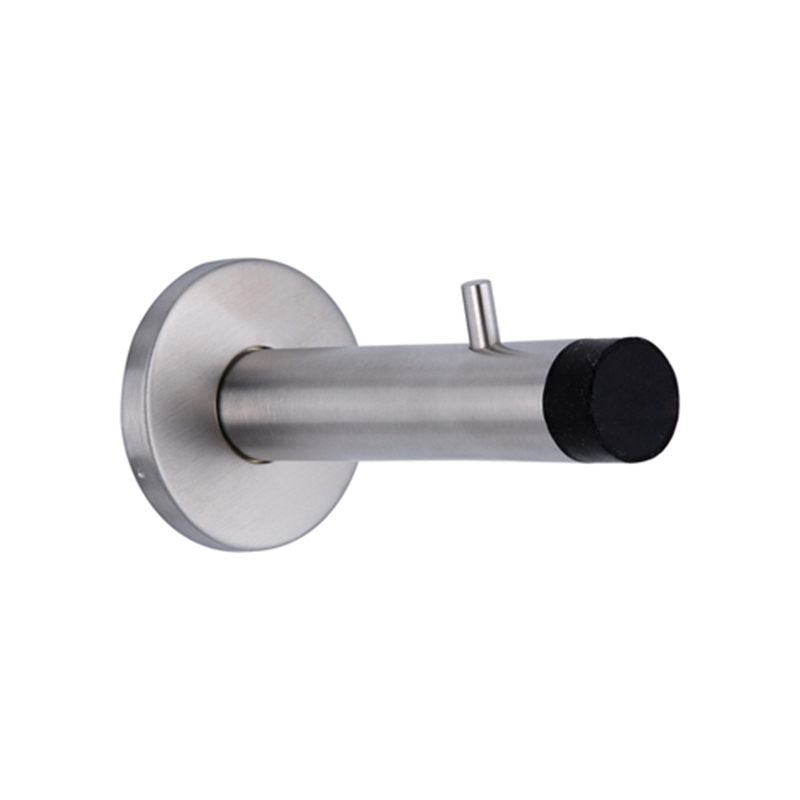
Wall stoppers usually come in a few functional styles. A small bumper stop is compact and works well in residential rooms. A longer projection stop is useful when the door handle is long or when you need to clear baseboards and wall trim. Some models are spring-loaded to reduce impact noise and protect hinges.
Material choice matters if the stopper is used in humid spaces or public facilities. Corrosion-resistant metal bodies and non-marking rubber tips reduce staining and maintain appearance under frequent contact. If you are standardizing hardware across multiple rooms, selecting a custom door stopper finish helps keep visual consistency with hinges, levers, and other accessories.
Correct placement is the most important part of installation. The stopper should prevent the door from contacting the wall, but it should not stop the door too early and reduce passage clearance. Open the door slowly to the maximum angle you want. Observe where the door handle, lever, or knob would touch the wall first. That is your protection target.
The safest approach is to make the stopper contact the door at a strong point. Many wall stops are designed to be hit by the door handle because it is the first contact point and it prevents handle marks. However, if the handle is delicate or the door swings with force, you may prefer contact with the door face rather than the handle tip. In that case, a longer wall stop projection may be needed.
Mark the spot lightly with tape or pencil, then close and reopen the door a few times to verify the alignment. A small adjustment at this stage prevents rework later.
A wall stop must be anchored properly because it experiences repeated impact. Drywall alone is not ideal for heavy doors unless you use suitable anchors or fasten into a stud. On solid masonry or concrete walls, you will need a masonry bit and appropriate plugs.
If you can locate a wall stud at the correct stop point, fastening into the stud is the strongest solution. If the stud is not aligned with the ideal spot, high-quality drywall anchors can still work for light-to-medium doors, but the stopper should be positioned to reduce shear force, and the door should not slam into the stop.
A durable door stopper installation is achieved when the fastener matches the substrate and the stopper body does not flex or rotate after repeated door contact.
Hold the stopper base at the marked location and confirm it will meet the handle or door face at the intended swing angle.
Mark the screw hole positions using the base as a template, then remove the stopper.
Drill pilot holes suitable for your wall. For drywall, use the bit size recommended for the anchor. For masonry, use a masonry bit and drill to the correct depth.
Insert anchors flush with the wall surface if required.
Position the stopper base and tighten screws evenly. Tighten until secure but do not over-torque, especially on drywall anchors.
Attach the stopper body and rubber tip, then test the door swing gradually and at normal closing speed.
After testing, check whether the stopper shifts. Any movement indicates the anchor is not holding properly or the door is impacting at an angle that increases shear stress.
Some wall stoppers are installed on baseboards to keep the wall surface clean. Baseboard installation can work well if the baseboard is thick and firmly attached, but thin trim can crack or loosen under impact. If you install on baseboard, ensure the fastener reaches the wall stud or the wall behind the baseboard rather than relying only on the trim material.
Also confirm the stopper projection clears the baseboard profile so the rubber tip contacts the handle or door face correctly. If the stopper is too short, the handle may still hit the wall above the baseboard.
Adhesive-mounted wall stoppers are convenient for smooth surfaces such as glass, tile, or painted walls where drilling is not allowed. However, adhesives fail when surfaces are dusty, textured, or exposed to humidity and repeated impact. Adhesive stops are best for low-force doors and light use spaces.
If you use adhesive, clean the surface thoroughly, allow it to dry, press firmly for full contact, and respect the curing time. Avoid testing with force immediately. For most commercial or high-traffic applications, screw-mounted wall stops are the more practical standard because they remain serviceable and predictable.
| Wall Surface | Preferred Mounting Method | Practical Note |
|---|---|---|
| Drywall with stud access | Screw into stud | Strongest and most stable |
| Drywall without stud access | Screw + drywall anchor | Use rated anchors, avoid door slams |
| Wood trim or baseboard | Screw through into wall | Ensure fastener reaches solid backing |
| Concrete or masonry | Masonry plug + screw | Drill to correct depth, avoid over-torque |
| Tile wall | Masonry bit + plug or adhesive | Tape drill point to prevent bit skating |
A common error is placing the stopper based on the door edge rather than the handle path. The handle is often the first thing to hit, so ignoring that path leads to wall damage even after installation. Another mistake is mounting too high or too low, which causes the stopper to miss the handle and hit a weaker part of the door.
Another frequent issue is using small anchors in drywall for heavy solid-core doors. The first few hits may feel fine, but repeated impacts enlarge the hole and the stopper becomes loose. Reducing impact force by adjusting door closers and encouraging controlled opening helps any wall stop last longer.
Installing a door stopper on a wall is straightforward when you focus on accurate placement and proper anchoring. Identify the true contact point by opening the door to the desired angle, mark the handle or door-face impact location, and choose a mounting method that matches the wall material. Fastening into a stud or solid substrate is the most durable approach, while rated anchors can work for lighter doors when installed correctly. With careful alignment and secure fixing, a wall stop protects finishes and hardware for long-term use.
If you are sourcing wall door stoppers for a renovation, multi-room build, or commercial project and need guidance on selecting a practical and durable specification, contact DESCOO. You can browse our door accessories page and share your door type, wall surface, and finish requirements. We can recommend suitable options and provide installation support for your application.
Previous: Which Door Stopper Is Best?