
Removing a lever door handle with hidden screws usually sounds harder than it really is. The reason many people feel stuck is not because the handle is complicated, but because the fixing points are designed to stay out of sight. In modern Door hardware, hidden screw construction is often used to create a cleaner and more refined look. That design works well visually, but it also means the removal process is less obvious if you have never done it before.
In most cases, the job starts by locating the release point on the lever or the rose cover. Some handles use a small hole or slot near the neck of the lever. Others use a concealed trim cover that needs to be lifted or rotated before the fixing screws can be reached. Once the decorative layer is removed, the mounting screws become visible and the handle can be separated from the door.
For homeowners, this is usually a repair or replacement task. For contractors, distributors, door factories, and project buyers, it is often part of a larger hardware upgrade. A handle with hidden screws is not only about appearance. It also reflects how the hardware is assembled, how it will be maintained, and whether it can stay stable after repeated use.
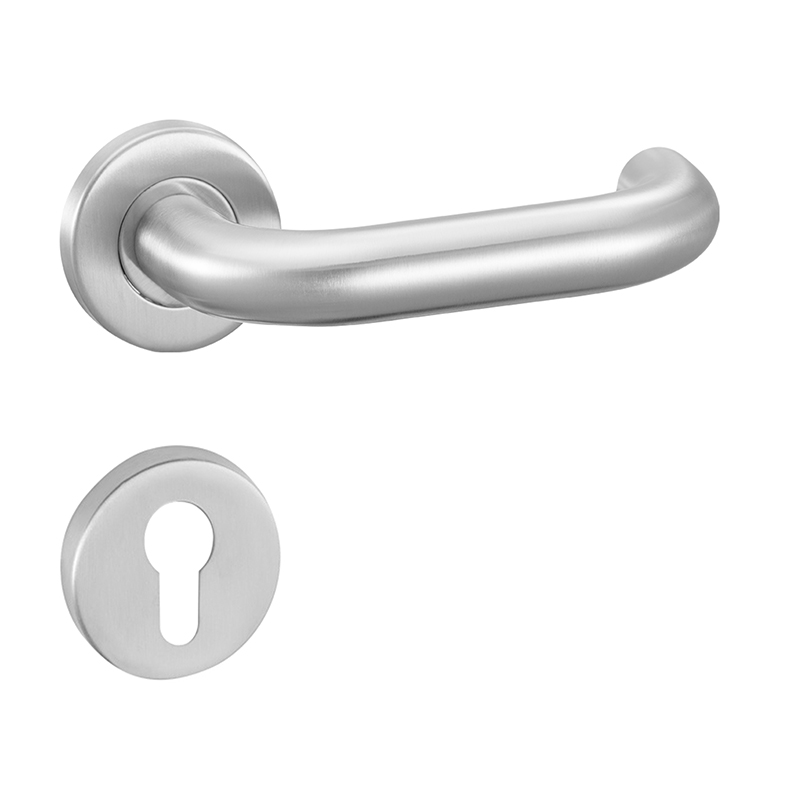
Hidden screw construction is widely used because it gives the door a cleaner finish. Without visible fixing screws on the rose, the handle looks more modern and better integrated with the door surface. This is especially important in offices, hotels, clinics, villas, and public buildings where hardware details affect the overall impression of the space.
The design also helps suppliers position the handle in more premium projects. Buyers often want a handle that looks simple and professional, not overly mechanical. A concealed mounting structure answers that expectation. But this also means the removal method must be understood clearly, otherwise maintenance teams may try to force off the trim and damage the finish.
That is why product design and service logic need to work together. A handle should look clean, but it should also allow practical removal and reinstallation when maintenance is needed.
A lever handle with hidden screws is usually removed in stages. First, the lever itself may need to be released using a thin tool inserted into a small access hole. Once the lever is detached, the trim cover or rose can often be pried up carefully or twisted off, depending on the structure. Beneath that cover, the actual mounting screws are exposed. These screws hold the handle set to the door and connect both sides through the spindle system.
The key is to work gently and in the right order. If the trim cover is forced before the release point is handled properly, scratches and deformation can happen. This is one of the most common problems in field maintenance. The handle may still come off, but the finish or the base may already be damaged by then.
In large projects, this matters more than people think. A maintenance mistake on one handle is minor. The same mistake repeated across many doors becomes a visible quality issue.
Many people start by searching how to remove a lever door handle with hidden screws because the handle is already loose, worn, or no longer returning smoothly. Once the handle is removed, it often becomes clear that the issue is not just one screw. Repeated use may have affected the internal linkage, the spindle connection, or the fit between the lever and the base.
This is where many buyers stop thinking only about removal and start thinking about replacement quality. A modern-looking handle is not enough if it cannot stay stable after frequent use. In reception areas, hotel corridors, office doors, and public venues, a weak handle quickly becomes a maintenance problem.
That is why many commercial buyers prefer a stronger contemporary lever handle with better machining accuracy, cleaner assembly, and more dependable material. The goal is not only to make installation easier. It is to reduce repeat maintenance and improve the long-term feel of the door.
A contemporary lever handle is often chosen because it fits modern interiors and architectural hardware lines more naturally. The shape is usually more streamlined, the rose is more controlled, and the whole product looks calmer on the door. This matters in projects where the hardware needs to support a consistent design language.
Our contemporary lever door handle fits naturally into this kind of upgrade path. It is intended for spaces where appearance and durability need to work together. Once an older hidden-screw lever handle is removed, many buyers want a replacement that gives the same clean look but with more reliable long-term performance. That is where a better-built contemporary handle becomes more useful.
For B2B customers, this is not only a style issue. It is also about project repeatability. A handle line that can be used across residential, office, hotel, and public projects is much easier to specify and sell.
Once a handle has been taken apart, the difference between low-grade and better-made hardware becomes obvious. Poorly made handles often show rough fitting, unstable internal connection, or weak tolerance control around the spindle and base. These problems may not be fully visible when the handle is new, but they become clear after repeated use.
This is why stainless steel remains an important choice for contemporary lever handles. A better material base supports corrosion resistance, strength, cleaner surface performance, and more stable daily operation. Precision machining matters just as much. If the clearance between components is controlled well, the handle will feel smoother, wobble less, and remain tighter over time.
For distributors and project buyers, that difference directly affects after-sales cost. Hardware that looks similar in photos can perform very differently after installation.
A concealed mounting structure gives a better visual result, but it also asks for more careful installation. If the mounting plate is not aligned correctly, if the screws are tightened unevenly, or if the spindle is not centered, the handle may begin to sag or rub even though the design itself is sound.
This is one reason commercial buyers look beyond the surface style. They want hardware that installs predictably, stays stable in service, and can be removed without unnecessary damage when servicing is needed later. The easier a handle is to install consistently across many doors, the better it performs in project delivery.
That is especially important in hotels, educational buildings, medical spaces, and office projects where one hardware choice may be repeated across dozens or hundreds of openings.
For retail customers, removing a hidden-screw lever handle is often a one-door problem. For B2B buyers, it is different. They need to think about batch consistency, finish matching, installation repeatability, maintenance time, and whether the supplier can support long-term cooperation.
A handle may look attractive on a sample board, but if the finish varies between batches or the fit changes from one production run to another, the project becomes harder to manage. That is why professional buyers often look for a supplier that can support stable production, clear specifications, and project-oriented communication.
This is also where OEM and ODM support become meaningful. Some buyers need a handle style that matches a door collection already in the market. Others need specific finishes, dimensions, or packaging for their own sales channel. A supplier that can cooperate on those details creates more real value than one that only sells a standard item.
A door handle is touched every day, often without people thinking about it. But the quality of that contact affects how the door is perceived. A handle that feels loose, rough, or visually inconsistent lowers the impression of the entire entrance. A handle that feels smooth, stable, and well-finished makes the whole opening feel more controlled.
This is why replacement hardware matters even after the old hidden-screw lever has been removed successfully. The handle is one of the most direct parts of the user experience. In commercial projects, it is also one of the most frequently noticed details. Better hardware supports both appearance and performance at the same time.
So, how do you remove a lever door handle with hidden screws? In most cases, the process involves finding the release point, removing the lever, exposing the concealed trim, and then accessing the mounting screws underneath. The steps are usually straightforward once the structure is understood, but the bigger decision often comes after removal.
If the old handle is worn, loose, or no longer suitable for the project, replacing it with a better contemporary lever handle is often the more practical long-term solution. A stronger material, cleaner hidden-screw construction, and more stable assembly can improve both maintenance results and daily use.
If you are reviewing replacement options for a door hardware program, a renovation project, or a bulk order requirement, feel free to contact us. We can help you compare suitable handle styles, discuss OEM or ODM needs, and recommend a more workable lever handle solution for your market.