
Adjusting spring loaded door hinges with a cross pin is usually about restoring proper closing force, smoother door movement, and better alignment after long-term use. In many cases, the door may start closing too fast, too slowly, or not returning to its position as expected. When that happens, the issue is not always the door itself. Very often, it comes down to hinge tension, installation accuracy, or whether the hinge type is suitable for the door size and usage level.
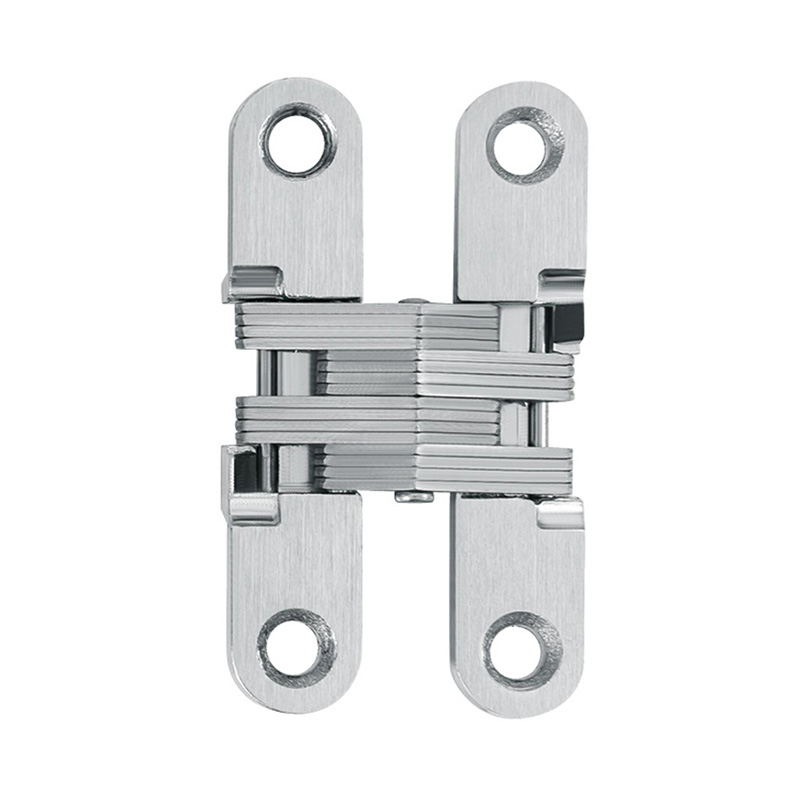
This matters even more in commercial and project-based applications. A hinge is a small component, but it affects daily traffic, door stability, visual quality, and maintenance workload. That is why many buyers no longer look at hidden hinges only as a decorative solution. They also want predictable adjustment, stable support, and better long-term performance. Our concealed cross hinge connects naturally with this topic because it is designed to keep the hinge body hidden inside the door structure while supporting smooth opening and closing, cleaner visual lines, and better hardware integration for modern interiors.
A spring loaded hinge works by storing and releasing controlled tension as the door moves. Over time, repeated opening and closing can change how that tension feels in real use. The door may begin to close with less control, or the closing action may feel uneven. In some settings, the problem may show up faster because the door is used more frequently or carries more weight than originally expected.
In projects such as hotels, offices, display cabinets, custom furniture, and decorative interior doors, even a small hinge issue can become noticeable very quickly. A door that does not return smoothly or sits unevenly after closing affects both function and appearance. This is why adjustment is not just a maintenance detail. It is part of keeping the finished project looking precise and working properly. On this hinge page, the product is presented as a concealed cross hinge built for hidden installation, smooth rotation, adjustment capability, and cleaner overall appearance in applications such as furniture, interior decoration, office equipment, and commercial display.
When people search for how to adjust spring loaded door hinges with cross pin, they are usually trying to understand the small but important part that controls or locks hinge tension during setup. In many hidden hinge systems, the cross pin works with the internal mechanism to help position or secure the adjustment state. The exact structure may differ from one hinge design to another, but the basic idea is similar: the pin is part of the controlled adjustment process rather than a decorative element.
That is why the adjustment should always be done carefully and in sequence. If the installer increases tension without checking door weight, height, and fit, the hinge may not perform the way it should. A well-adjusted hinge should support a door that moves smoothly, closes consistently, and sits properly without visible strain. Our concealed cross hinge is designed around this kind of concealed mechanical logic. It is not only meant to stay visually hidden. It is also intended to support smooth door movement, silent effect, and fine positioning through its structural design.
In practice, adjusting a spring loaded hinge with a cross pin should start with observation before any force is applied. The first question is whether the door is actually suffering from tension loss, or whether the issue comes from misalignment, loose fixing points, or overload. A hinge that is correctly tensioned but badly mounted will still perform poorly. The same is true if the door is too heavy for the hinge capacity.
A careful adjustment process usually means checking the hinge installation, observing the door gap, confirming screw tightness, and then making small tension changes instead of aggressive ones. The goal is to improve door behavior step by step. If the hinge is already under stress because the door width, thickness, or height is beyond the proper range, more spring force will not fully solve the issue.
This is one reason experienced buyers pay close attention to specification before installation. On this product page, the concealed cross hinge is listed with a zinc alloy embryo and stainless steel core, a size of 60 by 13 millimeters, a minimum door thickness of 18 millimeters, and guidance that hinge quantity should be determined by door thickness, height, width, and weight, with three hinges as the standard and four for doors above 2300 millimeters in height.
A lot of adjustment problems begin much earlier than the maintenance stage. They begin when the hinge is selected without fully matching the door conditions. If the hinge capacity is too low, if the hidden structure does not suit the application, or if the hinge count is insufficient, the result will often be premature performance issues that look like adjustment problems but are actually selection problems.
This is where concealed cross hinges become more relevant for higher-aesthetic projects. They are chosen not only because they are hidden, but because they support a clean door appearance while still providing load-bearing function, adjustment capability, and long-term durability. According to the product information, this hinge is designed to remain largely hidden after installation, offers adjustment for door position and gap control, and is intended for use in cabinets, wardrobes, office equipment, commercial display, and similar spaces where appearance matters. For B2B buyers, this matters because poor hinge matching leads to more than one faulty door. In batch projects, it can lead to repeated site corrections, inconsistent closing feel, and avoidable labor costs.
One reason concealed cross hinges are used so widely is that they solve both a functional and a visual problem. Functionally, they connect the door and the frame or cabinet body while allowing controlled movement. Visually, they reduce exposed hardware and keep the door surface cleaner. That is especially valuable in interiors where the hardware should support the design quietly instead of dominating it.
In hospitality interiors, office furniture, display systems, and high-end cabinetry, exposed hinges can interrupt the overall look. A hidden cross hinge keeps the door line simpler and makes the full installation feel more finished. The product page highlights this hidden design as one of the hinge’s biggest features and also notes benefits such as high load-bearing capacity, silent effect, and durability.
That combination is why many specifiers choose concealed cross hinges in the first place. Adjustment is important, but the hinge still has to serve the larger design goal of a clean and professional final result.
Retail users may only think about whether one door closes properly. B2B buyers think at a different scale. They need to know whether the hinge can be installed consistently, adjusted with predictable results, and maintained without creating extra work across dozens or hundreds of openings. In project supply, a hinge that performs well in one sample but poorly across a full batch creates serious trouble.
This is why commercial buyers often ask about adjustment range, bearing performance, silent operation, and service life together. They are not separate concerns. If a hinge can be adjusted but does not remain stable after use, the real project value is limited. On this page, the hinge is described as durable, suitable for frequent opening and closing, and capable of maintaining performance over years under normal use. It is also positioned as a factory supply product for architectural and furniture-related applications. That is the kind of positioning project buyers usually want. They need hardware that fits design expectations while reducing later maintenance pressure.
A hinge may look small from the outside, but its performance depends heavily on the material combination and the inner core design. Adjustment quality is not only about whether the hinge has a tension feature. It is also about whether the body can withstand repeated force without loosening, deforming, or losing control in the rotational movement.
Our concealed cross hinge uses a zinc alloy embryo with a stainless steel core. That combination matters because the outer structure and internal load path both influence how stable the hinge feels in daily operation. The page also lists several surface treatment options, including sand chromium, sand nickel, imitation gold, green antique, and red antique, which helps buyers coordinate hardware appearance with different project styles.
For importers, distributors, and project contractors, this means the hinge is easier to position both technically and visually. A hidden hinge still needs material credibility, especially in projects that require repeated opening and a refined finish standard.
In real sourcing work, many customers are not only buying one hinge. They are building a complete hardware solution for cabinetry, display systems, commercial interiors, or branded furniture lines. That is why OEM and ODM capability matter. Buyers may need finish adjustments, packaging changes, specification matching, or a hinge solution that fits a particular door structure or customer segment.
A supplier that understands these needs brings more value than one that only offers standard stock. This concealed cross hinge is presented as a China manufacturers suppliers factory product, which supports the idea that it can be used in broader sourcing and project cooperation scenarios.
For B2B buyers, that supplier role is important. They want more than a part number. They want a partner who can help reduce fitting risk, improve consistency, and support hardware planning across repeat orders.
So, how do you adjust spring loaded door hinges with a cross pin? The practical answer is that adjustment should begin with understanding the hinge structure, checking alignment and load conditions, and then making controlled tension corrections only after confirming that the hinge is properly selected and installed. The cross pin is part of that controlled process, not something to force or ignore.
For modern concealed hinge projects, the bigger issue is not only adjustment. It is choosing a hinge that remains stable, hidden, and workable over time. Our concealed cross hinge fits that direction well because it combines hidden installation, adjustment capability, smooth movement, silent effect, and durable structure in a compact format. It is suitable for furniture, decorative interiors, office equipment, and commercial display applications where both aesthetics and function matter.
If you are comparing concealed hinge options for a furniture line, display project, or OEM and ODM hardware program, feel free to contact us. We can help you review suitable specifications, finish directions, and project matching details, and recommend a more workable concealed hinge solution for your market.
Previous: