
A lever door handle is one of the most common and essential hardware components found in modern architecture. Beyond its obvious purpose of opening and closing doors, it also serves as a symbol of ergonomic design, mechanical precision, and aesthetic harmony. Unlike traditional knobs, a lever handle operates with a simple downward or upward push, making it intuitive and accessible for users of all ages.
At DESCOO, we design and manufacture high-quality lever Door Handles that combine elegant design with robust functionality. Whether for residential interiors, commercial buildings, or hospitality spaces, our lever handles offer long-lasting performance, comfort, and refined style.
This article explains what a lever door handle is, how it functions, what types exist, and how materials, finishes, and design features affect both appearance and durability.
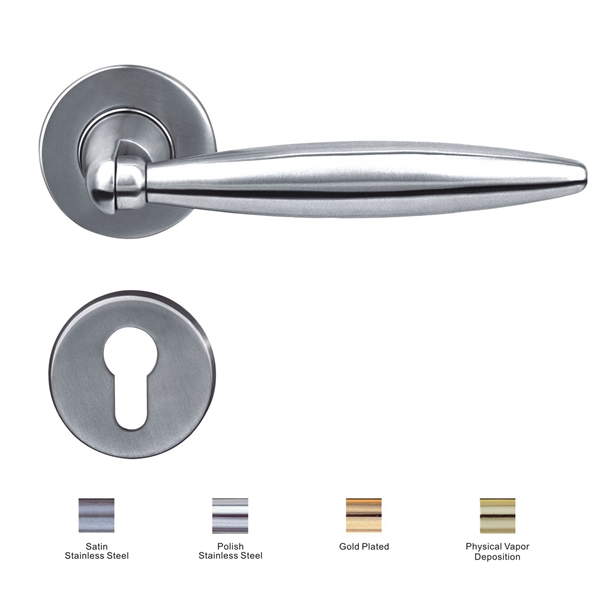
A lever door handle is a horizontal handle attached to a door’s latch mechanism that allows users to open or close a door through a downward or upward motion. It provides a mechanical advantage, requiring less effort to operate compared to round knobs.
When you press the lever, it rotates around a spindle, retracting the latch bolt and allowing the door to open. Releasing the lever allows a spring to return it to its original position, ensuring smooth and consistent motion.
This mechanism makes lever handles particularly suitable for environments where ease of use and accessibility are important — such as hospitals, offices, and homes for the elderly or children.
DESCOO lever door handles use precision-engineered spindles and internal springs, ensuring seamless movement and long-term reliability. Each handle is tested for thousands of cycles to guarantee consistent performance under daily use.
Easier to grip and operate, even with wet or gloved hands.
More ergonomic, reducing wrist strain.
ADA-compliant, offering universal accessibility.
Adds a modern, linear aesthetic to doors and interiors.
In essence, the lever handle transforms a simple mechanical function into an experience of comfort and design precision.
Understanding the parts of a lever door handle helps explain its operation and durability. Each component plays a vital role in ensuring a smooth, secure, and long-lasting mechanism.
Lever Handle: The external part that users grasp. It can be flat, curved, or rounded based on design preference.
Spindle: A metal rod that connects the two handles through the door and transmits motion to the latch.
Latch Mechanism: The spring-loaded bolt that holds the door closed until retracted by the handle.
Backplate or Rose: The decorative mounting plate that covers the mechanical fittings.
Lock or Privacy Mechanism: In locking models, an integrated keyhole or button provides security and privacy.
| Component | Function | Material Used |
|---|---|---|
| Lever | Manual operation | Zinc alloy, stainless steel |
| Spindle | Transfers motion | Steel |
| Latch | Secures door | Brass or steel |
| Rose/Backplate | Decorative cover | Metal or alloy |
| Spring | Returns handle | Stainless steel coil |
DESCOO lever handles are crafted with reinforced spindles and high-torque springs to prevent sagging — a common issue in low-quality handles. Each unit undergoes torque and corrosion testing to ensure structural integrity.
The combination of carefully engineered components makes lever handles not only durable but also precise in performance, maintaining their feel and motion for years.
Lever door handles come in several types depending on installation style, function, and lock integration. Choosing the right type ensures the handle fits both your door structure and your intended use.
A lever on rose design features a circular or square rose (backplate) that conceals the fixing screws. It offers a sleek, modern appearance and can be paired with separate locks for flexibility.
Ideal for: Contemporary homes, hotels, and offices seeking minimalist elegance.
This type includes an elongated plate behind the lever, often incorporating a keyhole, lock turn, or bathroom latch. It offers a more traditional or robust appearance.
Ideal for: Classic or traditional interiors requiring visible lock functions.
Privacy Lever: Includes an integrated locking button, commonly used for bathrooms or bedrooms.
Passage Lever: Operates without a lock, suitable for hallways or connecting doors.
Features a key-operated cylinder, ideal for exterior or secure interior doors. It offers high resistance against tampering and forced entry.
DESCOO lever handles are available across all these variations, allowing a consistent design language across multiple door types in a single project. This versatility ensures both functional performance and aesthetic unity throughout a space.
A lever handle’s material and finish determine not only how it looks but also how well it withstands years of handling and environmental exposure.
Zinc Alloy: Offers excellent corrosion resistance and allows for complex shapes, making it ideal for design flexibility.
Stainless Steel: Highly durable and ideal for commercial or outdoor applications.
Brass: Provides a warm, premium appearance with natural antimicrobial properties.
Aluminum: Lightweight and cost-effective for interior use.
DESCOO lever door handles are made from high-density zinc alloy and stainless steel, combining strength, weight balance, and finish uniformity.
The finish enhances both protection and visual harmony. Below are popular finish types and their unique qualities:
| Finish Type | Description | Best Use |
|---|---|---|
| Brushed Nickel | Subtle metallic tone, resists fingerprints | Modern kitchens and offices |
| Matte Black | Bold, contemporary, hides fingerprints | Minimalist interiors |
| Chrome | Bright reflective finish | Classic spaces |
| Satin Brass | Luxurious golden tone | Premium residential and hotel projects |
DESCOO’s advanced electroplating and PVD coating technology ensures each finish remains resistant to scratches, tarnish, and discoloration. This allows our handles to retain their original elegance even under high-touch conditions.
A carefully selected material and finish can significantly enhance the perceived quality of your space — turning an everyday handle into a statement of design excellence.
Beyond visual appeal, a lever door handle must offer a comfortable and secure grip. Ergonomics determine how easy it is to use the handle without strain or risk of slippage.
Ease of Operation: Unlike round knobs, lever handles require minimal effort to press, ideal for children, elderly users, and people with limited hand mobility.
Consistent Grip: The linear design allows firm grip from any angle, even when carrying objects or with wet hands.
Non-Slip Contours: Curved or textured levers enhance comfort while preventing slips.
Lever handles comply with ADA (Americans with Disabilities Act) standards, making them suitable for universal use. This makes them a preferred choice in hospitals, hotels, and office buildings.
DESCOO lever handles are designed with human-centered ergonomics in mind — offering the right combination of grip size, lever length, and resistance. Each handle’s curve is engineered to fit naturally into the palm, ensuring comfort and safety during frequent operation.
Avoid overly sharp or angular handle ends that can cause injury.
Ensure handles return smoothly to their original position to prevent accidental snags on clothing.
Choose handles with fire-rated materials for safety-critical installations.
By blending ergonomic comfort and structural precision, lever handles can elevate daily use into a seamless and safe experience.
In both residential and commercial design, lever door handles have become the preferred standard due to their adaptability, functionality, and visual versatility. Their simple mechanics make them reliable, while their stylistic diversity makes them suitable for virtually any interior.
Universal Usability: Lever handles are intuitive and require minimal motion to operate, accommodating all users.
Aesthetic Flexibility: Available in a wide range of finishes and designs to match any décor style.
Maintenance and Longevity: High-quality materials like those used by DESCOO resist corrosion, wear, and tarnish even under heavy use.
Design Continuity: The same handle model can be used across multiple door types — from bedrooms to offices — creating a cohesive look.
Easy Replacement and Installation: Standardized fittings make it simple to upgrade or replace without modifying the entire door.
| Application | Recommended Design | Benefits |
|---|---|---|
| Home Interiors | Brushed nickel or black minimalist lever | Comfort and visual balance |
| Offices | Stainless steel lever on rose | Modern, professional look |
| Hotels | Satin brass lever on backplate | Luxury aesthetic and privacy function |
| Commercial Buildings | Heavy-duty stainless lever | Durability and safety compliance |
With their combination of style and usability, lever door handles offer an ideal blend of form and function.
At DESCOO, we bring these qualities together through advanced manufacturing techniques, meticulous surface finishing, and rigorous performance testing. Our lever handles represent the perfect balance between elegance, precision, and endurance, suitable for any architectural or interior design project.
A lever door handle is more than a piece of hardware — it’s an essential detail that influences how we interact with our surroundings every day. Its ergonomic design ensures accessibility, while its variety of styles and finishes adds personality to any space.
At DESCOO, we design lever door handles that combine refined aesthetics with mechanical integrity. Built from durable materials and finished with long-lasting coatings, our handles deliver smooth operation, modern appeal, and lasting value.
Explore our full collection at DESCOO Lever Handle and experience how thoughtful design and engineering can transform a simple door accessory into an enduring statement of craftsmanship and quality.
Previous: What Is A Pull Handle?