
The direction of a lever door handle may seem like a small detail, yet it affects comfort, accessibility, safety, and even the long-term durability of the Door hardware. Homeowners, designers, and builders often encounter confusion when determining how a lever handle should be oriented—whether it should point left, right, inward, or outward. This question becomes especially important when choosing high-quality hardware such as the lever handle from DESCOO, where design precision and ergonomic performance are central. This article explores the correct orientation of lever Door Handles, compares installation methods, explains their intended applications, and provides answers to common installation questions.
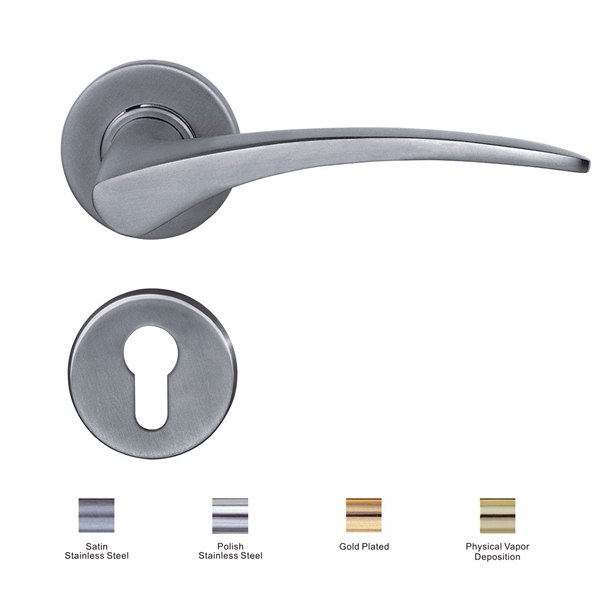
A lever door handle must be positioned based on the door swing direction and user comfort. Unlike round knobs, lever handles rely on a downward push motion, making orientation critical. The correct direction allows the user to press the lever comfortably with their natural movement, avoids accidental catching on clothing, and matches industry safety standards.
Lever handles can be installed in several orientations depending on whether the door is left-handed, right-handed, interior, exterior, or part of a commercial safety system. Each orientation has a specific purpose and benefits.
For a left-hand door—one that swings inward to the left while the hinges are on the left—the lever usually points to the right when installed on the interior side. This makes the lever easy to push downward with the dominant hand for most users. The smooth curvature of the handle will face the user, and the long part of the lever will extend away from the hinges. This arrangement supports ergonomic body movement and prevents the lever from striking the door frame when pulled closed.
For a right-hand door—one that swings inward to the right with hinges on the right—the lever typically points to the left on the interior side. This mirror installation balances user comfort and accessibility. The lever aligns naturally with the motion of pulling or pushing the door open. This prevents awkward wrist movement and ensures smooth operation even for children or elderly users.
Outward-swinging doors often use the opposite orientation to prevent the lever from interfering with the open-air side. In such cases, the handle direction is adjusted so that the lever is facing away from the door edge to reduce the risk of catching on bags or clothing as someone walks past. Safety guidelines also favor this orientation in commercial buildings where outward doors must provide clear passage.
Exterior doors benefit from specific lever orientation to match lock alignment and weather sealing. The lever should face away from the door frame so that the latch mechanism works smoothly, and the user can comfortably operate both lever and lock. On high-security doors, lever direction may reduce forced-entry risks by minimizing exposed leverage points.
In barrier-free design or ADA-compliant environments, lever handles should face the direction that requires the least wrist rotation. This generally means positioning the lever horizontally and slightly angled toward the opening side of the door. The design of DESCOO lever handles—engineered with ergonomic curvature—makes them suitable for universal installations where accessibility is essential.
Different rooms and settings call for different lever orientations. The purpose of the room often influences the installation method.
Bedrooms, bathrooms, and closet doors typically follow standard left-hand or right-hand orientations, ensuring consistent movement throughout the home. The lever should align with natural entry direction so users can turn the handle without thinking.
Utility doors often open outward to save space inside. For these rooms, the lever direction is installed to minimize interference with appliances or cabinetry. Stainless-steel or brushed-metal lever handles from DESCOO complement modern kitchen designs by offering both durability and smooth operation.
In commercial buildings, lever orientation follows safety flow. Many exit doors open outward, requiring lever handles positioned to avoid accidental snagging. The orientation also supports panic hardware or fire-rated locks.
Hotel room doors typically require consistent orientation across the building, ensuring users instinctively understand how to operate the handle. A uniform direction improves convenience and reduces maintenance complexity.
| Installation Type | Lever Direction | Best For | Notes |
|---|---|---|---|
| Left-Hand Door | Lever points right | Bedrooms, offices | Ergonomic downward motion |
| Right-Hand Door | Lever points left | Living rooms, interior spaces | Creates natural wrist direction |
| Outward-Swing Door | Lever points away from frame | Utility rooms, commercial exits | Prevents interference |
| ADA / Universal | Lever horizontal and ergonomic | Accessible spaces | Minimizes wrist strain |
| Exterior Door | Lever away from entry frame | Front / back doors | Enhances lock operation |
This comparison shows that lever orientation is not arbitrary; each arrangement serves a functional and ergonomic purpose.
Lever handles must be installed thoughtfully to ensure durability, usability, and safety. These considerations protect the handle’s mechanism and improve long-term performance.
Door handing determines lever direction. Verifying whether the door is left-hand or right-hand before installation avoids costly mistakes. Many premium handle systems, including DESCOO models, allow reversible installation to simplify this process.
Proper lever orientation must match the latch direction. If misaligned, the latch may not retract smoothly, causing sticking or premature wear. When the lever direction is correct, the latch fully retracts with minimal effort.
Standard height is approximately 900–1050 mm from the floor. Installing too high can cause wrist discomfort; too low may feel unnatural. Lever handles function best within the ergonomic height range.
Lever handles should not collide with door frames, moldings, or adjacent walls. Incorrect direction can result in the lever striking the frame, damaging both the handle and the surrounding material.
In family homes with children or elderly users, the lever should face the direction that minimizes twisting. Curved lever designs, like those produced by DESCOO, enhance comfort regardless of orientation.
For exterior installations, the lever direction should protect the mechanism from rain or strong wind. Stainless-steel components and corrosion-resistant finishes help extend lifespan outdoors.
Many homeowners and builders raise similar questions during installation. Below are detailed explanations to help clarify them.
While general standards exist, there is no single rule. The correct direction depends on door handing, room purpose, and user ergonomics.
A backward lever may hit the frame, feel uncomfortable to push down, cause latch misalignment, and wear out the mechanism prematurely. Reversible lever designs allow easy correction.
Yes. Most modern lever handles, including DESCOO’s, feature reversible cores that allow the installer to reorient the lever without replacing the entire unit.
In commercial or emergency-exit environments, lever orientation affects how quickly people can exit a room. Outward-facing levers minimize obstruction and improve safety compliance.
Yes. Lever handles on both sides typically align with each other. However, the functional angle changes depending on whether the door is opened or closed.
Absolutely. Consistent orientation contributes to visual harmony across rooms. Stainless-steel finishes are particularly smooth, so correct alignment enhances the overall design.
The direction of a lever door handle is an important detail that influences comfort, safety, and practicality. Understanding door handing, swing direction, and room purpose ensures the lever is oriented in the most ergonomic way. Different installations—left-hand, right-hand, outward-swing, ADA-driven, and exterior configurations—serve distinct needs and should be chosen carefully. Manufacturers like DESCOO design lever handles with reversible functions and precise engineering, allowing flexible yet reliable installation in any environment.
By selecting the correct orientation and considering user comfort, clearance, and functional flow, you ensure that the lever handle operates smoothly, maintains its longevity, and complements the overall design of the space.
Previous: How To Adjust A Door Stopper
Next: What Is A Pull Handle?