Office building doors are used calmly most of the time. Staff push meeting room doors, visitors pull lobby doors, cleaning teams move through service areas, and tenants pass through corridors without thinking about the handle. The problem appears when movement becomes urgent. If the grip is slippery, the handle is too small, the door hardware feels confusing, or the pull direction is unclear, people lose time exactly when the exit route should feel simple.
For office developers, contractors, architectural hardware distributors, facility managers, and project buyers, push pull door handles should be chosen with movement flow in mind. A handle is not only a decorative part of the door. It affects how quickly users understand the door, how firmly they can grip it, and whether daily operation stays smooth under high-traffic conditions.
During normal office use, a person may take a second to figure out whether to push, pull, or turn. During an emergency, that hesitation matters. Door hardware should give users a clear physical cue: where to place the hand, which direction to move, and how much force is needed.
This is why handle shape and surface detail matter in office corridors, meeting room exits, shared workspaces, and internal passage doors. A handle that looks stylish but feels unclear can slow movement when many people are trying to leave the same area.
In crowded office spaces, users may reach for the handle quickly or from an awkward angle. Smooth handles can feel less secure, especially if hands are wet, sweaty, or occupied with bags and documents.
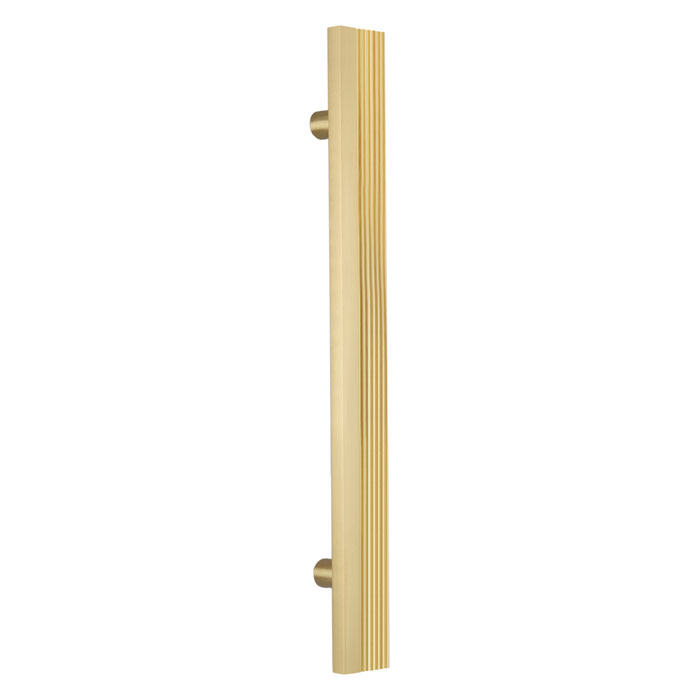
Our side grooves pull handle uses striped groove details to improve grip stability and hand comfort. For project buyers, this type of surface detail is useful because it adds tactile guidance without making the handle visually heavy.
A pull handle may feel reliable, but emergency egress performance also depends on hinges, closers, locks, latches, door weight, floor clearance, and access control settings. If the door is hard to open, misaligned, or fitted with the wrong locking hardware, the handle alone cannot solve the problem.
This is especially important in office buildings where some doors separate tenant spaces, stair corridors, meeting areas, pantry zones, or controlled access points. The handle should be reviewed together with the full door hardware schedule.
For doors that form part of a required exit path, project teams should confirm local fire and building code requirements before ordering. Some doors may require panic hardware, fire-rated hardware, latch release rules, or special coordination with access control systems.
In those areas, push pull Door Handles may be used only when they fit the approved door design. They should not be treated as a substitute for required emergency exit devices.
Office handles are touched hundreds of times each day in lobbies, meeting rooms, shared corridors, pantry areas, washroom entries, and service doors. If the handle loosens, scratches easily, or loses its surface quality too soon, the building begins to look poorly maintained.
For facility managers, that becomes a maintenance issue. Loose handles create user complaints. Worn surfaces reduce the professional feeling of the office. In busy buildings, hardware should be selected for repeated use, not only first installation.
The side grooves pull handle is made from high-quality brass, which supports durability and corrosion resistance for indoor architectural hardware use. For office projects, this helps buyers prepare handles for spaces that need both appearance and long-term service.
A durable handle reduces the chance of early replacement and helps maintain a more consistent building finish across different floors or tenant areas.
In an office building, door hardware can quietly guide people. A long pull handle suggests where to grip. A grooved handle gives a stronger touch point. A clear push-pull arrangement helps people move through the door faster.
This matters in areas such as glass partitions, meeting rooms, office entrances, and corridor doors. If door hardware looks too decorative or unclear, users may test the door before using it correctly. In daily use that is annoying. In emergency movement, it can create delay.
Many office buildings use repeated door types across several floors. If one floor uses one handle style and another floor uses a different pull direction or shape, users may not respond consistently.
For project buyers, standardizing handle type, mounting position, finish direction, and door operation logic can make the building easier to use. It also simplifies maintenance and replacement planning.
A handle with no grip detail may work well in quiet areas, but it can be less reliable in fast movement. If users cannot grip firmly, they may need to try again or use extra force. This becomes more noticeable on heavier doors or doors with closers.
Side grooves help the hand stay more stable on the handle surface. For office projects, this small design detail can improve confidence when users pull the door quickly.
Some handles look impressive but are difficult to clean, repair, or replace. Deep decorative gaps, fragile finishes, or unusual mounting structures can create maintenance issues later.
For B2B buyers, emergency-related door areas should prioritize clear operation, stable mounting, practical grip, and long-term maintenance over purely decorative design.
A handle should be tested on the type of door it will actually serve. A lightweight cabinet-style door and a heavier office glass or timber door create different user experience. The handle may feel comfortable on a sample board but less suitable after installation.
Before bulk ordering, project teams should test:
Door weight
Door closer resistance
Pull direction
Mounting height
Grip comfort
Lock or latch coordination
Finish matching
Cleaning access
Replacement method
These checks help reduce installation surprises and later complaints from building users.
Architects and buyers often focus on appearance. Facility managers care about daily use, cleaning, repairs, and replacement. Their input can prevent hardware choices that look good at handover but become difficult to maintain after the building is occupied.
For office buildings, handle selection should connect design, safety, and maintenance from the beginning.
The right office door handle should make movement easier, not more confusing. It should provide a clear grip, support smooth operation, match the door hardware system, and stay reliable under repeated use. For emergency egress areas, the handle must also fit the approved fire and building code strategy for that door.
If your office project, commercial building, interior fit-out, or architectural hardware supply order needs push pull door handles with better grip stability and cleaner indoor design, come to us to plan the handle selection properly. Send the door type, opening direction, material, finish requirement, installation location, safety review needs, and order quantity. Our team can help match side groove pull handle options with your project so the hardware feels clearer to use, easier to maintain, and better suited for high-traffic office spaces.